
Buying a Guitar Online Without Playing It First: How to Not Get Burned
The used guitar checklist assumes you’re in the room with the guitar. Increasingly, you’re not: the exact model you want, in the finish you want, is a thumbnail eight hundred miles away. I’ve bought and sold guitars online for years, from both sides of the transaction, and the game is entirely learnable. It comes down to extracting in photos and questions what your hands would have learned in ten minutes.
The photos you’re owed
Listing photos are marketing; you want evidence. Any serious seller will provide, on request: a straight-down-the-neck shot from the headstock (the closest a camera gets to your rifle-sight twist check), close-ups of the frets in raking light around positions one through five and twelve through fifteen (divots and wear read clearly in angled light), the back of the headstock and neck joint (crack and repair territory; on Gibsons, demand it explicitly), the electronics cavity if the guitar’s been modified, and the case it ships in. A seller who balks at five photos for a three- or four-figure sale is telling you what post-sale support will look like. And a listing that uses only the manufacturer’s stock photos for a “used, excellent condition” guitar isn’t a listing, it’s a hope.
Serial number too, politely: it confirms year and country of origin against the maker’s records, and a seller who won’t share even a partial serial is a walk-away.
The questions that filter sellers
You’re testing knowledge and honesty at the same time. “When was it last set up, and to what string gauge?” (a seller who knows owns the guitar; a flipper shrugs). “Any fret wear, and how’s the truss rod, does it turn freely?” (the second half of that question catches problems the photos can’t). “Why are you selling?” (the answer matters less than the fluency; owners have stories, flippers have scripts). “Anything not original?” asked after you’ve studied the photos, because you already know some answers and you’re checking whether they volunteer or conceal. From my seller’s side of years of these conversations: honest sellers answer fast, in detail, and often talk themselves into disclosing flaws mid-reply. Evasive answers to easy questions are the whole verdict.
Where you’re actually protected
The venue determines your safety net more than the seller does. Dedicated gear marketplaces like Reverb sit in the middle tier: real buyer protection and a return process, at the cost of fees priced into the listing. Big retailers’ used programs (Guitar Center Used, Sweetwater’s Gear Exchange and demo stock) are the safest tier: generous return windows, meaning you effectively can play it first, in your house, and their used prices are often startlingly close to private-party. General marketplaces (Facebook, Craigslist shipped-sale strangers, auction sites) are the wild west tier: the prices are best and the protection is thinnest, so reserve them for local meetups where the in-person checklist applies, and never, under any pressure, move a shipped transaction to friends-and-family payment or off-platform “to save fees.” That request is the single most reliable scam tell in the hobby.
Whatever the venue: pay in ways that preserve dispute rights, video yourself unboxing anything expensive (it settles shipping-damage claims instantly), and check the guitar over within the return window, not when you get around to it.
Pricing without the showroom
Sold listings, not asking prices, same rule as ever; Reverb’s price guide and completed sales are the used market’s bluebook. Then price in the online-buying tax honestly: shipping and fees, the chance of a setup on arrival ($75 well spent on any shipped guitar, since trucks and temperature changes undo setups), and a margin for the small cosmetic surprise the photos didn’t show. If the deal only makes sense when everything arrives perfect, it’s not a deal, it’s a bet.
The confidence ladder
If this all sounds like too much vigilance for a first purchase, use the ladder: buy new or retailer-used with a return window while you’re learning (the Squier-vs-Fender money question doesn’t change online), graduate to Reverb once you can read listings fluently, and save the marketplace bargains for when you know a model well enough to interrogate its photos like you own one already. The online market is where the best deals live precisely because it scares people. Learn the protocol above and their fear is your discount.
Keep reading
-
Acoustic or Electric First? Pick the One You'll Actually Practice
The honest answer to the most common beginner guitar question, including the finger-pain myth, the real costs of each path, and the one factor that predicts who keeps playing.
-
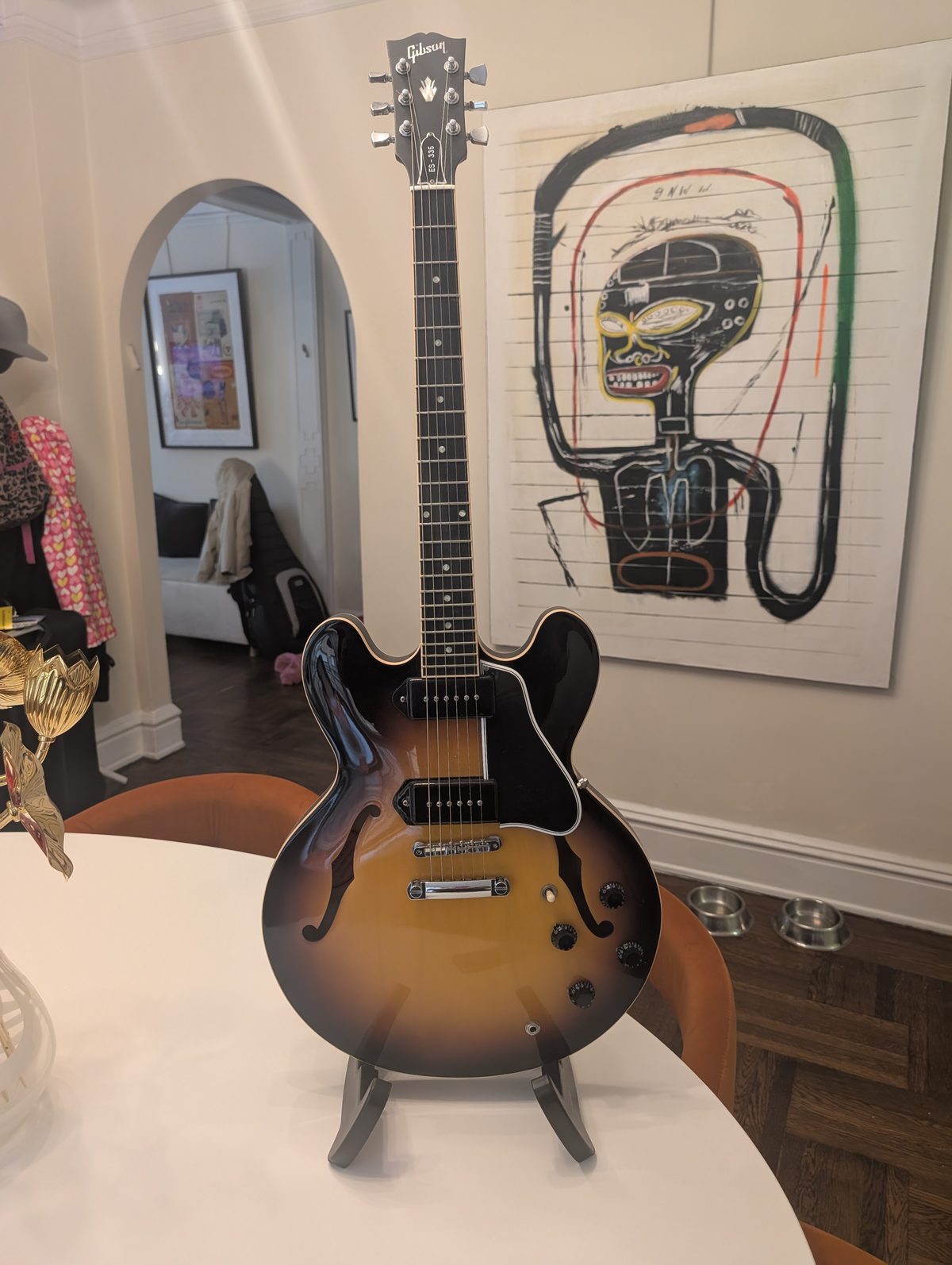
Gibson ES-335 with P-90s: The Rare One, Reviewed After Years of Ownership
A long-term review of the Custom Shop ES-335 with factory dogear P-90s: what the rare pickup swap does to the most famous semi-hollow ever made.
-
The $40 Guitar Setup: The Best Upgrade You Can Buy Is Not a Guitar
What a professional setup actually includes, why it transforms cheap guitars, when you need one, and which parts you can safely learn to do yourself.