
Should You Hear What the Audience Hears? Monitoring With a Modeler
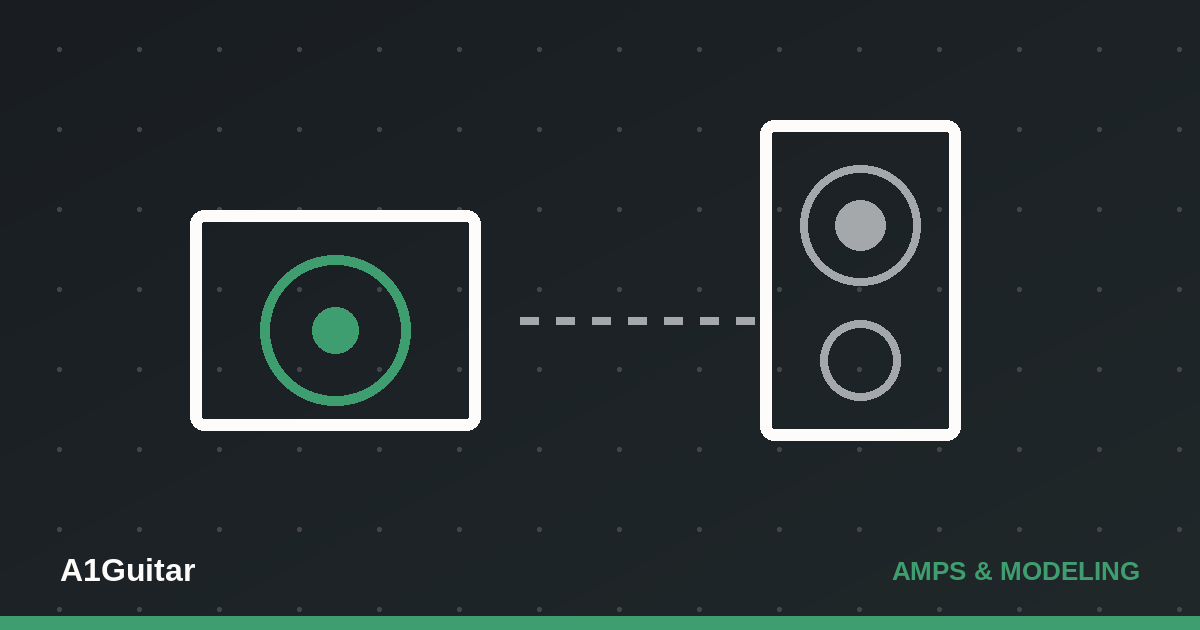
When the amp is a real tube amp on a stand, you hear the amp and the audience hears the amp too, plus whatever the PA does to it. When the amp is a modeler, those two sounds can come apart. You can send the room a finished, cab-simulated tone and send yourself something else entirely. That raises a question I have not settled: should you hear what the audience hears?
Two sounds on one stage
In most rooms I play, the audience is not hearing my amp directly. They hear it through a mic and the PA, or through the modeler’s own output going to the PA. What I hear on stage is a separate thing: the sound of whatever is pointed at me. With a tube amp those two are tied together. With a modeler you get to choose.
I first wrote about this at the end of my piece on the Tone Master ’59 Twin, where I said it was really a question about monitoring. This is the longer version of that thought.
What an FRFR cab gives you
An FRFR cab, which stands for full range, flat response, plays back the modeler’s cab simulation as neutrally as it can. If the same cab-simulated signal goes to the PA, then you and the audience are hearing the same sound, just at different volumes and in different places. That is the case for it, and it is the neutral side of the argument I made in Do FRFR Cabs Sound Different?
The cost is that the cab sound comes from a recording, not from a speaker moving air. Some players miss that, and I understand why.
What a real guitar speaker adds
A real guitar speaker being pushed does something an FRFR does not. You feel it in your hands, and it changes how you play, which is the part Joe Bonamassa calls the violence in the Twin piece. It is what you hear on stage. It is not necessarily what the audience hears, but it affects how you play, so it matters.
Here is the catch. If the modeler’s signal already includes a cab simulation and then goes through a real guitar speaker, you are stacking one speaker on top of another sound that was already a speaker. For the stage you would want the amp part of the modeler only, without the IRs or cab simulation, going into a powered cab with a real guitar speaker in it.
The setup I keep coming back to
This is the arrangement I find most interesting, and I do not have a verdict on it. The modeler sends two feeds. One has the cab simulation on and goes to the PA, so the audience gets the finished tone. The other has the cab simulation off and goes to a powered cab with a real guitar speaker behind me, so I get the pushed speaker and the air in the room. Many modelers let you turn the cab simulation off on one output, but check yours before you count on it.
It has a real downside, and it is the whole reason I am torn. The sound I am playing against is not the sound the audience is getting. The sound they hear is the one with the cab built into the modeler.
It is also one more cab on the wagon. How I move a rig around the city is in The Cart Rig, and every extra box matters there.
The case for melding with the audience
I used to do my own monitoring with the power section of my Budda. I have to ask myself whether that defeated the purpose, because what I heard was not what the room heard. The opposite approach is to hear what the audience hears, in the same tone, from the same feed, and make my playing decisions off that. Shouldn’t we meld with the audience?
I do not have an answer yet. The feel of a real speaker is part of why a lot of us play the way we do, and the case for hearing what the room hears is just as strong.
How I would find out
Try it at a rehearsal before a gig. Run the same feed to the PA and to your own cab for one song, then switch your own cab to the amp-only feed for the next song. Have someone stand where the audience stands. Record both takes from out front and listen back, because a take that felt great on stage can sound different from the floor.
I would also pay attention to whether your playing changes. If you dig in harder with the real speaker and the recording sounds better for it, that is an answer. If you play the same either way and only feel better, that is a different answer.
Keep reading
-
Joe Bonamassa's Tone Master '59 Twin: Mixed Feelings, and the Violence Problem
Fender's Joe Bonamassa Tone Master '59 Twin is a lighter Twin that holds together tighter. One player's take on what it gets right, why one tone is a limit, and what modelers still miss.
-
Do FRFR Cabs Actually Sound Different? Size, EQ and the Looks Problem
Are FRFR cabs all the same? A player's take on how size and EQ change the sound, plus the other problem with FRFR: they all look like PA speakers, and what to do about it.
-
Why My Live Rig Is a Kemper (While My Tube Amps Stay Home)
A working guitarist's split-rig confession: boutique tube amps for home and studio, a Kemper Profiler Stage for every gig, and the honest reasons why.