
Pedal Order Explained: The Signal Chain That Makes Everything Sound Better
Pedal order is the cheapest tone upgrade that exists: rearranging pedals you already own can fix sounds you thought needed new gear. There’s a standard order, there are good reasons behind it, and there are a few famous exceptions worth knowing. Here’s all three.
The standard chain
Guitar, then: tuner, wah/filter, compressor, drive/fuzz/distortion, EQ, modulation (chorus, phaser, flanger), delay, reverb, then amp.
That’s the order that makes each pedal hear the signal it was designed to hear. Everything below explains why, which is what lets you break the rules on purpose instead of by accident.
Why this order works
Tuner first because it wants the cleanest, strongest signal to read, and because when you hit it, everything after it mutes.
Wah before drive is the classic funk-to-rock wah sound: the filter sweep gets pushed into the distortion and sings. (Wah after drive is a real choice too; it’s more vocal and more extreme. Hendrix-adjacent players argue about this forever.)
Compressor before drive evens out your picking before the distortion reacts to it, which keeps chugging consistent and clean tones snappy. After drive it also raises noise, which is why it lives early.
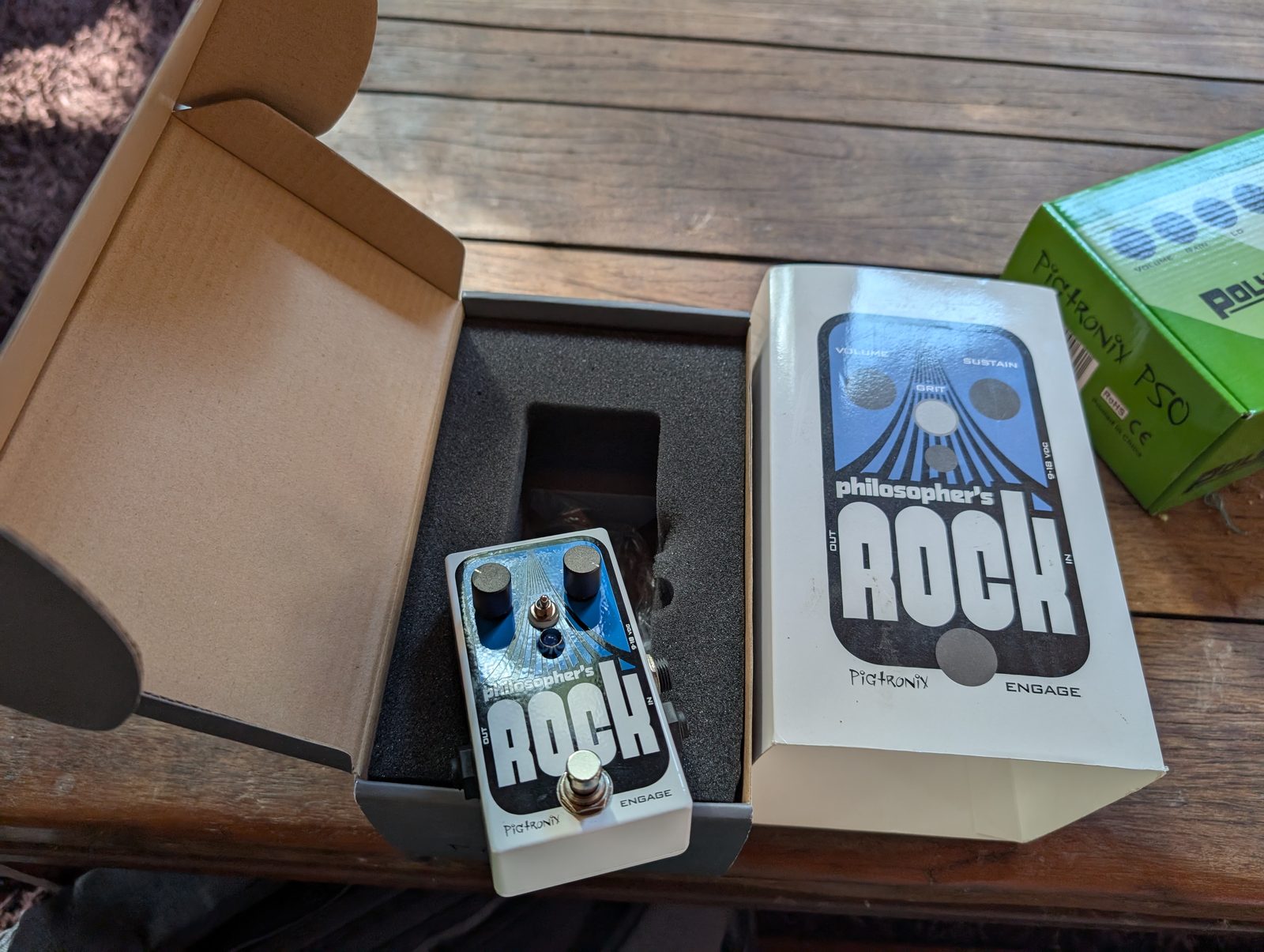 A compressor-sustainer like this Pigtronix Philosopher’s Rock (from our own collection) lives early in the chain, before the drives.
Drive pedals in the middle because everything before them shapes what gets distorted and everything after them decorates the distorted sound. If you stack multiple drives, the general habit is lower gain into higher gain, and experimenting with stack order is free.
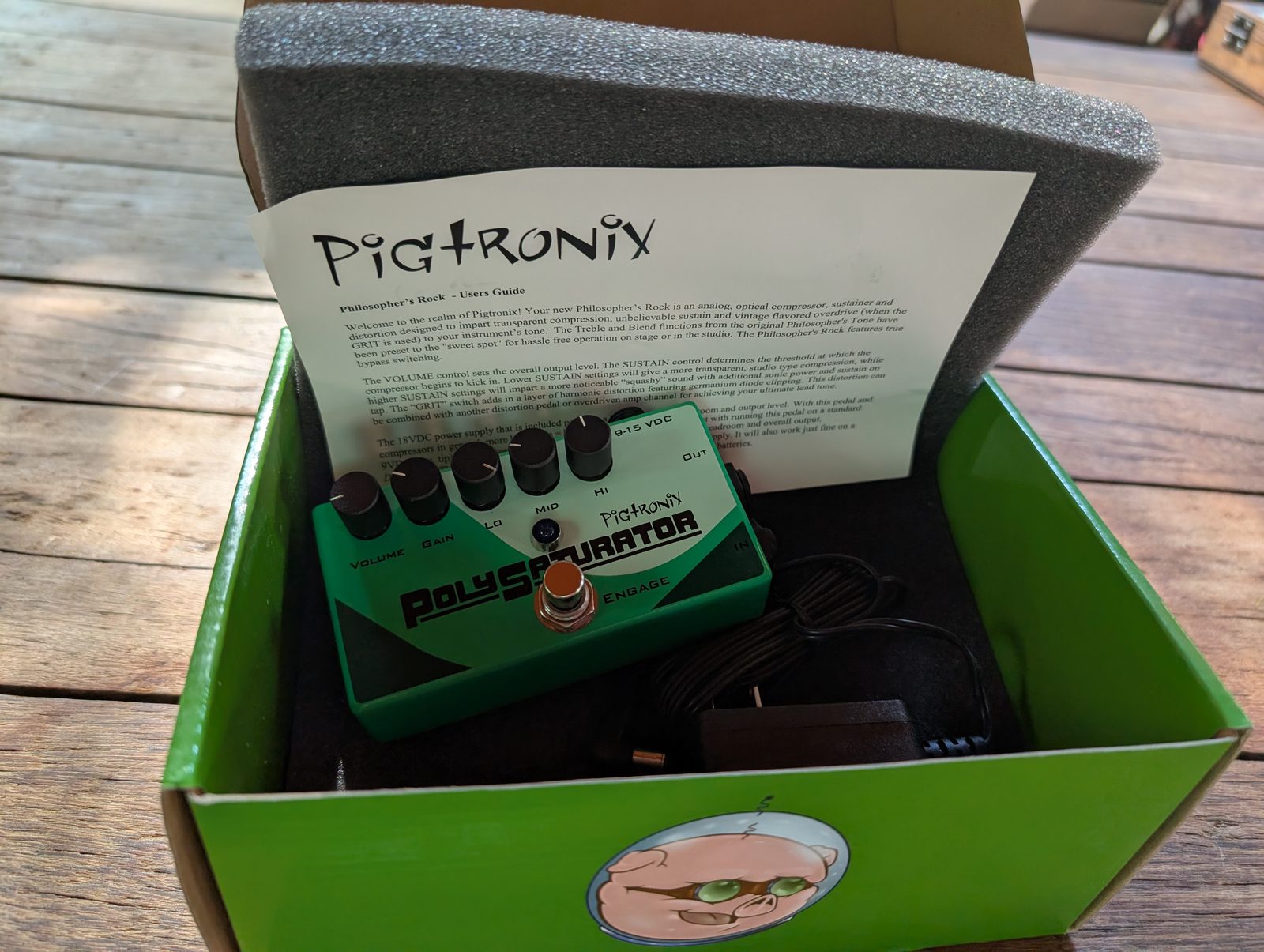 Drives and saturators, like this Pigtronix Polysaturator, sit mid-chain: after filters and compression, before modulation and time effects.
Modulation after drive because a chorus that hears a distorted signal makes lush, wide distortion, while distortion that hears a chorused signal makes gritty mush. Almost everyone prefers the first.
Delay and reverb last because they’re echoes of your finished sound. Distorting an echo (delay before drive) smears every repeat into fuzz. Echoing a distorted note (drive before delay) keeps each repeat clear. Reverb sits at the very end for the same reason: it’s the room, and the room comes last.
The famous exceptions
Fuzz wants to be first. Vintage-style fuzzes (Fuzz Face types especially) react to your guitar’s volume knob and pickup impedance directly; put a buffered pedal in front and the magic dies. If you own one weird fuzz that stops cleaning up, this is why (the full buffer vs true bypass story explains why buffers show up on boards at all). Put it before everything, even the tuner if it comes to that.
The effects loop changes the map. If your amp has one and you use the amp’s own distortion, modulation, delay and reverb sound cleaner in the loop (after the amp’s preamp) rather than out front. Front-of-amp order still applies to everything before the loop.
Loopers go last. A looper records everything before it, so put it at the very end (after reverb) if you want loops to capture your full sound, or in front if you want to change tones on top of a dry loop. End of chain is the common answer.
Volume pedal placement is a choice. Early (after wah) works like your guitar’s volume knob and cleans up drive; late (before delay/reverb) does smooth swells that keep their echo tails. Ambient players want it late.
Power and boards, briefly
Daisy chains work until they buzz: digital pedals (delay, reverb) sharing a chain with drives is the classic hum recipe. An isolated power supply fixes it and is usually the right first “boring” purchase once you’re past four or five pedals. And if you’re still choosing an amp to put all this in front of, modelers take pedals happily; see the apartment guitarist’s gear guide and our Katana vs Spark comparison.
The five-minute experiment
Set up the standard chain, play for a day, then swap exactly one pair (wah/drive, or compressor/drive) and listen. Rules in audio exist because they describe what most people like most of the time, and your ears outrank all of them. The standard order is the map; you’re allowed to leave the road once you know where you are.
Keep reading
-
Buffer vs True Bypass: What Actually Matters for Your Tone
What a buffer actually does to your signal, when true bypass helps and when it quietly hurts you, and how to figure out what your board actually needs.
-
Your First Pedalboard for Under $200 (Buy in This Order)
A complete, expandable first board: which pedals to buy, in what order, where used money goes furthest, and the traps that waste half your budget.
-
Pedal Power, Explained: Why Your Board Hums, Clicks, and Dies (and the $0-to-$150 Fixes)
Daisy chains vs isolated supplies, milliamps, polarity, and voltage: everything about powering pedals, in plain English, ranked by what actually causes problems.