
Single-Coil vs P-90 vs Humbucker: The Pickup Guide From a Rack That Has All Three
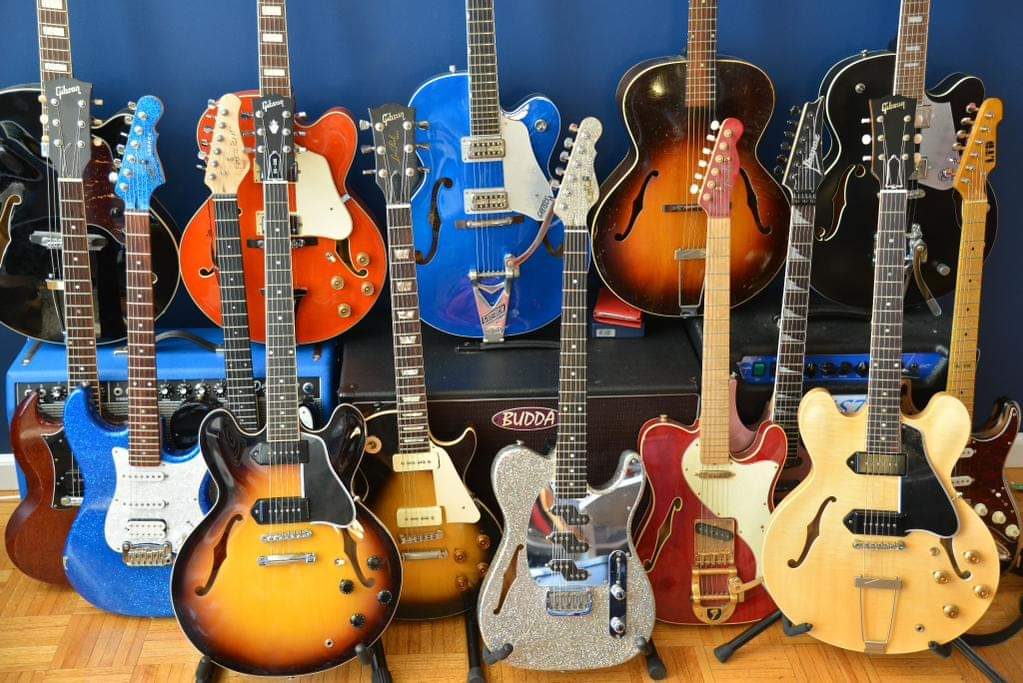
Pickup talk is where guitar forums go to die, so let’s ground this one in hardware I can reach out and touch: Telecasters with single-coils, a Gibson semi-hollow with P-90s, and humbucker guitars sharing the same wall. Three families, all gigged, all recorded, none of them theoretical. Here’s what actually separates them, without the mojo vocabulary.
The test lab. Every pickup type in this article lives in this rack.
The physics, in one minute
A pickup is a magnet wrapped in wire; a steel string vibrating in its magnetic field induces a signal in the coil. Every design difference downstream is a tradeoff between three things: how much of the string’s detail gets captured, how much electrical noise gets captured along with it, and how the coil’s size and winding shape the frequency response. Single-coils are one narrow coil: detailed, bright, and noisy. Humbuckers are two coils wired to cancel that noise (hence the name), which also widens the magnetic window and thickens the sound. P-90s are single-coils built wide and wound fat: the detail and the noise of a single-coil with a chunk of a humbucker’s midrange muscle. That’s genuinely most of the science; the rest is voicing details and marketing.
Single-coils: the sound of the recorded canon
The Telecaster and Stratocaster single-coil is the most recorded electric guitar sound in history: snappy attack, glassy top, and a clarity that sits in a dense mix like it was mixed in advance. Chords stay legible under gain longer than any other design, which is why country, funk, indie, and an enormous share of classic rock live here. The tax is 60-cycle hum, which is real, directional, and worst under stage lights and dimmers (we cover the broader noise war on MusicWide). The deeper truth nobody tells beginners: single-coils are honest to the point of rudeness. They reproduce your picking exactly, which is why they make you better and why some players never forgive them. My Tele bias is documented, and the short version of the entire single-coil case is that the guitar disappears and the playing is what’s left.
One current-day footnote from my own amps: single-coils are also the best partner for midrange-forward amps; it’s the pairing that made me call the Budda Superdrive underrated specifically for single-coils.
P-90s: the best-kept open secret
The P-90 is what happens when a single-coil hits the gym: still articulate, still open on top, but with a bark in the low mids that pushes an amp into breakup beautifully. It’s the sound of early rock and roll, punk’s better-recorded moments, and a huge amount of gritty indie. Against a humbucker it’s clearer and more raw; against a Fender single-coil it’s fatter and ruder. Having lived with P-90s in a semi-hollow for years: they’re the pickup I hand people who say humbuckers sound blanketed but can’t live with Telecaster hum politics, even though, fair warning, P-90s hum too, nearly as much as any single-coil. They remain chronically underrepresented in what stores stock, which keeps used P-90 guitars a relative bargain, and I say this as someone who benefited.
Humbuckers: power and polish
The humbucker’s noise cancellation made high gain practical, and its thicker voice made lead playing sing: fat, compressed-feeling, sustaining, with a smooth top that flatters aggressive amps. Hard rock, metal, jazz (the same pickup, wildly different settings), and most shred history are humbucker territory. In a band mix they occupy more space per note, which is glorious for a lone guitar in a trio and occasionally a turf war in a two-guitar band, one of the quiet reasons so many great two-guitar bands pair a humbucker guitar with a single-coil guitar. The classic criticism, mud in the neck position and detail loss under heavy distortion, is real on cheap examples and largely solved on good ones; coil-splits on modern guitars offer a usable, if slightly polite, single-coil impression as a bonus.
How to actually choose
Choose by the records you play along with; your ears already voted years ago. If you want maximum mix clarity and don’t fear hum: single-coils. If you want grit with articulation and a bargain used market: P-90s. If you want gain, sustain, and silence: humbuckers. If you’re buying your first serious guitar and truly don’t know, a coil-split humbucker guitar hedges every bet, and the used market makes trying a second flavor nearly free. Just don’t accept the forum framing that one of these wins. The rack in the photo exists because the correct number of pickup types is all of them.
Keep reading
-

Acoustic or Electric First? Pick the One You'll Actually Practice
The honest answer to the most common beginner guitar question, including the finger-pain myth, the real costs of each path, and the one factor that predicts who keeps playing.
-
Gibson ES-335 with P-90s: The Rare One, Reviewed After Years of Ownership
A long-term review of the Custom Shop ES-335 with factory dogear P-90s: what the rare pickup swap does to the most famous semi-hollow ever made.
-

The $40 Guitar Setup: The Best Upgrade You Can Buy Is Not a Guitar
What a professional setup actually includes, why it transforms cheap guitars, when you need one, and which parts you can safely learn to do yourself.