
Reverend Eastsider T Review: The Telecaster Fender Doesn't Make
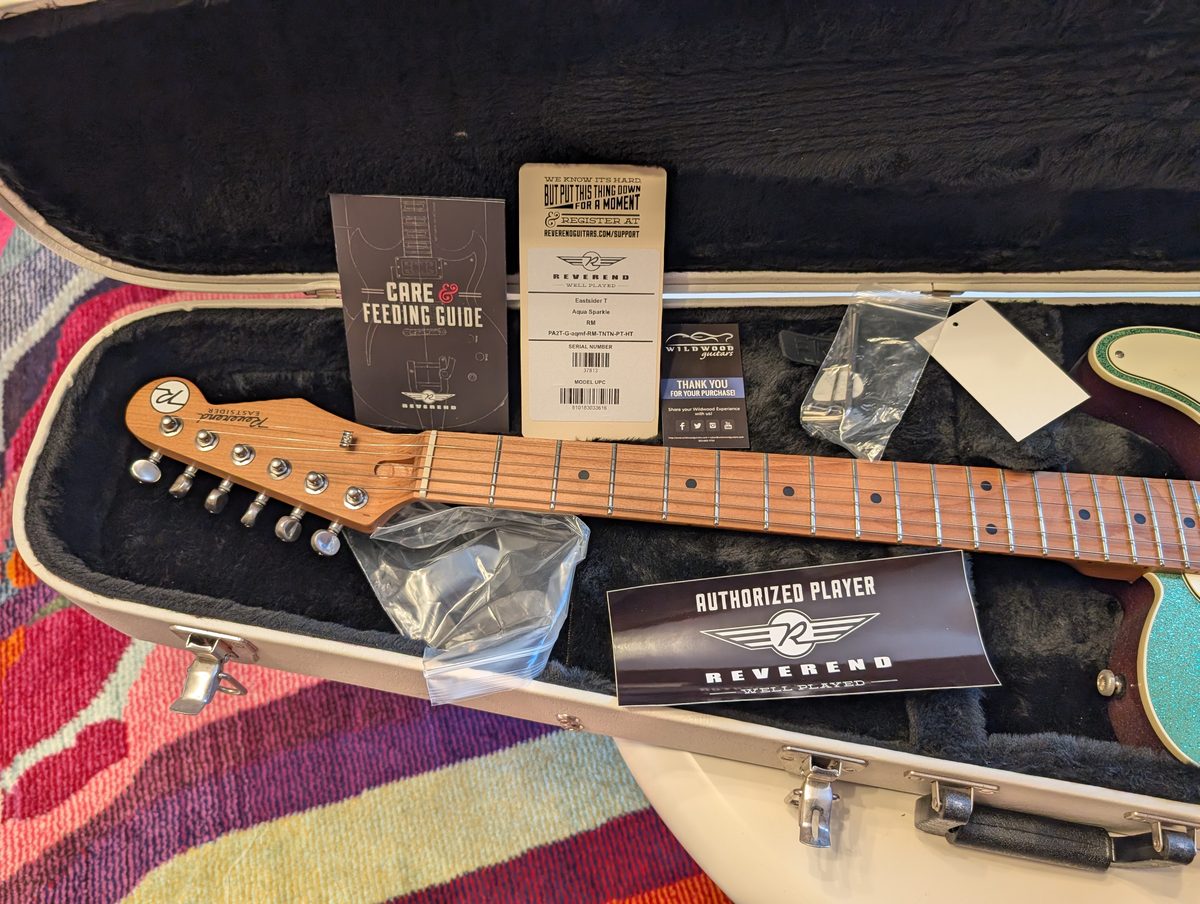
Having just argued at length that Telecasters need no help, here’s the guitar that complicates my own thesis: the Reverend Eastsider T, Pete Anderson’s signature model, is what happens when a legendary Tele player lists his few honest gripes with the design and a smaller company actually fixes them. Mine is a 2019 in the Wildwood-exclusive sparkle finish (the hang tag says Aqua Sparkle; in sunlight it says look at me), and it’s the T-style I recommend to people who think they already know what a Tele is.
Case candy intact, which tells you how this one’s been treated.
Disclosure: this exact guitar is currently listed for sale as part of a collection thin-out. Years of playing inform this review; so does the fact that I clearly kept reaching for other guitars, which is itself data, and I’ll be honest about why.
What Reverend changed, and why it works
The body is chambered korina instead of solid ash or alder, which does two things: it drops the weight to shoulder-friendly territory, and it adds a faint airiness to the attack, a whisper of semi-hollow bloom on a guitar that still behaves like a solidbody. Korina is the tonewood of $50,000 Explorers; on a $1,200-street Reverend it’s just Tuesday.
The neck is roasted maple, medium oval, and this is the single biggest upgrade over a standard Tele: roasting stabilizes the wood so dramatically that seasonal truss rod fiddling mostly stops, and the satin feel out of the box is what other guitars achieve after a decade of play. Pin-lock tuners and a proper bone nut continue the theme: boring reliability engineering, everywhere.
The pickups are Reverend’s Talnicos (alnico with tal… their tall-coil design), voiced Tele-adjacent but fatter, with a push-pull that flips the middle position out of phase for that hollow, funky honk no real Tele makes without surgery. The bridge still twangs and cuts; it just does it with more torso.
The honest comparison to a Fender
Against a Fender Player or an American Professional Tele, the Reverend wins on build consistency, weight, tuning stability, and feature count, and it’s not particularly close. The Fender wins on two things that matter and one that shouldn’t: the specific unfiltered brightness of the traditional recipe (the Reverend is a richer, slightly darker take, and purists will hear it), resale liquidity (Fenders sell in a weekend; Reverends take patience and sell to people who know), and the headstock, which shouldn’t matter and does.
Why did I keep reaching past it? Honestly: it’s too nice. The sparkle finish made me treat it like the good china, and guitars you protect don’t accumulate stories. That’s a me problem, and possibly a you solution, because a barely-played example of a stage-grade guitar is exactly what the used market should hand you.
Who should buy one
The gigging player who wants Tele function with less weight and zero tuning drama. The recordist who wants T-style plus the out-of-phase party trick in one take-everywhere guitar. And anyone whose Tele curiosity keeps colliding with Fender fatigue. Skip it if your heart specifically wants the sound and look of the original recipe, because a Reverend is a great answer to a slightly different question.
Used, they’re one of the best deals going precisely because of that resale patience problem: this level of build for four figures barely used is checklist-shopping at its most rewarding. Check the push-pull pot, check the neck like you’d check any roasted maple (it’ll be fine), and prepare to explain the brand to your bandmates right up until you plug in, at which point it explains itself.
Keep reading
-

Acoustic or Electric First? Pick the One You'll Actually Practice
The honest answer to the most common beginner guitar question, including the finger-pain myth, the real costs of each path, and the one factor that predicts who keeps playing.
-

Squier Classic Vibe vs Fender Player: Where Does the Extra $300 Actually Go?
The best Squiers and the entry Fenders overlap more than the headstock suggests. What the price gap really buys, and who should pocket the difference.
-

The $40 Guitar Setup: The Best Upgrade You Can Buy Is Not a Guitar
What a professional setup actually includes, why it transforms cheap guitars, when you need one, and which parts you can safely learn to do yourself.