
Reverend Eastsider T vs Fender Telecaster: I Own Both, Here's the Honest Split
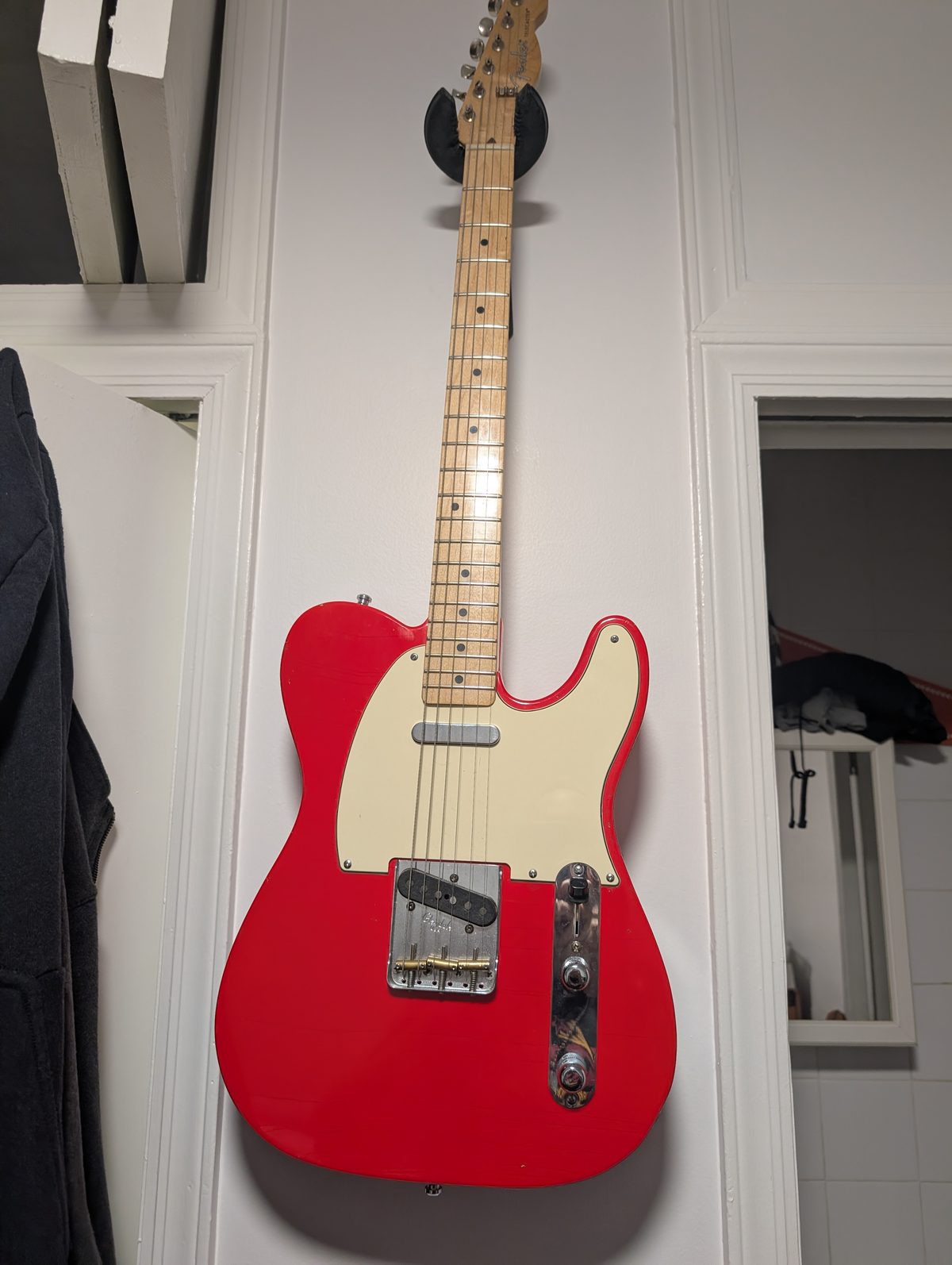
This comparison lives in my guitar rack. On one hanger, a Fender Telecaster, red, maple neck, the recipe unchanged since Eisenhower. On another, a Reverend Eastsider T, Pete Anderson’s signature, sparkle finish, the recipe deliberately corrected. I’ve written about each on its own; this is the head-to-head, from someone with no dog in the fight except years of reaching for one or the other and noticing which one my hand picked.
The incumbent.
Where the Reverend just wins
Let’s do the objective column first, because it’s lopsided. Weight: the Eastsider’s chambered korina body hangs noticeably lighter than an ash or alder Fender, and on a three-set night that’s not a spec, it’s your shoulder. Stability: the roasted maple neck shrugs off seasonal changes that send a standard maple Fender neck to the truss rod; combined with pin-lock tuners and a proper bone nut, the Reverend simply stays in tune harder. Features: the Talnico pickups’ push-pull out-of-phase middle position is a sound no stock Telecaster makes, and it’s genuinely useful in a mix, not a party trick you forget. Consistency: Reverend’s Korean build quality runs eerily uniform, while Fenders, even good ones, vary enough that the advice is always “play the specific one you’re buying.”
If this were a spec-sheet decision, the article would end here. It is not a spec-sheet decision.
Where the Fender refuses to lose
The sound, exactly. The Eastsider is voiced Tele-adjacent: fatter, richer, a touch darker. Ninety percent of listeners hear a Telecaster. But that last unfiltered, wiry, slightly rude ten percent, the sound of the bridge pickup snapping against a bright slab body, is the specific thing sixty years of records taught your ears to want, and the Reverend rounds it off. Whether that’s a flaw or an upgrade is the entire question. Pete Anderson, one of the great Tele players alive, chose the correction. Your ears may vote incumbent.
Resale. A used Fender sells in a weekend to anyone; a used Reverend sells eventually, to someone who knows. I’ve experienced this personally from the selling side, and it’s real money: the Fender’s liquidity is worth a couple hundred dollars of insurance built into the purchase.
The headstock. It shouldn’t matter. At the open mic, at the jam, in the band photo, it matters. I’ll say no more except that I notice which guitar I grab when someone’s taking pictures.
The part I only learned by owning both
Here’s the data point no spec sheet holds: the Fender got played more. Not because it’s better, but because the Reverend, in its sparkle finish with its case candy intact, felt like the good china, and I treated it accordingly. The Fender feels like a tool, so I used it like one, and guitars you use accumulate the wear and the stories and the muscle-memory familiarity that make you play them even more. A plainer-finish Eastsider might have escaped this loop entirely. Buy the one you won’t protect.
The verdict
Buy the Reverend if you gig a lot (weight and tuning stability compound over a hundred nights), you want the out-of-phase colors, you buy guitars to keep rather than flip, or your back has opinions. It’s objectively more instrument per dollar, especially used, where the resale-patience problem becomes your discount.
Buy the Fender if the classic recipe is the sound in your head (no correction wanted), you like knowing you can resell in a weekend, or the tool-not-china psychology above sounds like you. The Player-vs-Squier ladder also gives Fender the win at every budget below the Reverend’s price.
And if you’re the kind of person who ends up with both on the rack: welcome. The Reverend is the better guitar, the Fender is the better Telecaster, and I stand by both halves of that sentence.
Keep reading
-

Acoustic or Electric First? Pick the One You'll Actually Practice
The honest answer to the most common beginner guitar question, including the finger-pain myth, the real costs of each path, and the one factor that predicts who keeps playing.
-

Squier Classic Vibe vs Fender Player: Where Does the Extra $300 Actually Go?
The best Squiers and the entry Fenders overlap more than the headstock suggests. What the price gap really buys, and who should pocket the difference.
-

The $40 Guitar Setup: The Best Upgrade You Can Buy Is Not a Guitar
What a professional setup actually includes, why it transforms cheap guitars, when you need one, and which parts you can safely learn to do yourself.