
Epiphone Inspired by Gibson Custom: A Budget Mirror of the Real Custom Shop
There’s a specific kind of shopper this tier was built for: someone who’s landed on a particular historic spec they want, a certain year’s neck carve, a specific pickup wind, a specific aged-hardware look, and is about to assume that means Gibson Custom Shop pricing. Before that assumption gets acted on, it’s worth knowing that Epiphone’s “Inspired by Gibson Custom” line often already covers exactly that spec, at roughly a quarter of the cost.
What’s actually different here
This isn’t just “nicer Inspired by Gibson.” The Custom tier replicates specific documented Custom Shop instruments rather than general Gibson specs: named historic reissues, period-correct appointments, and in several cases aged hardware and relic’d finish options that mirror what Gibson’s own Custom Shop offers as a separate, expensive line item. Materials step up too, with higher-grade tops on the flame maple models, better fret wire, and more consistent binding work. The pickups are still Epiphone-branded but modeled more closely on specific vintage-spec winds rather than generic humbucker designs.
Compared to the standard Inspired by Gibson tier below it, the difference is precision: that tier gets you correct Gibson dimensions and good licensed pickups, this tier gets you a specific historic instrument’s spec sheet. Compared to real Gibson Custom Shop above it, the difference is mostly provenance and hand-finishing, not the underlying blueprint; a Custom Shop guitar is built by a dedicated team to exacting tolerances with the real name and real pedigree attached, and that costs real money on top of the spec itself.
Notable models
The Les Paul Custom in this tier (often in Ebony with gold hardware) replicates the classic three-pickup or two-pickup Custom appointments at a fraction of the real Custom Shop price. The 1959 Les Paul Standard reissue targets one of the most-cited specs in the whole Gibson catalog. And several Inspired by Gibson Custom SG and ES models carry aged-hardware finish options that let you get a worn-in look without paying Murphy Lab money for it.
Who should buy it, and who’s wasting money
This tier is for the player who has a genuine, specific reason to want a documented historic spec, not just “a nicer Les Paul.” Street prices typically run $900-$1,200, which puts it well above a standard Inspired by Gibson guitar but still a fraction of real Custom Shop, usually $3,000 and up for a comparable instrument. If the thing you actually want is a specific neck carve or finish detail rather than the words “Custom Shop” on the truss rod cover, check whether this tier already builds it before spending Custom Shop money to get there.
Who’s wasting money: anyone buying this tier expecting Custom Shop resale value or hand-built provenance, because neither transfers. And if you don’t have a specific spec in mind, and you’d be just as happy with a great-playing Les Paul at a lower price, the standard Inspired by Gibson tier gets you most of the playing experience for less.
The honest caveat
“Inspired by” is doing real work in that name. These are excellent instruments for the money, but they’re Epiphone’s interpretation of a spec, built in a different factory to a different manufacturing process than the real Custom Shop, and the fit-and-finish gap, while narrower than at any other tier comparison on this ladder, is still there if you put one next to the genuine article. Buy it for what it is, a superb value that gets close to a real historic spec, not as a secret identical twin.
For where this tier sits against every other rung on the ladder, see the full Gibson and Epiphone lineup guide.
Keep reading
-
Acoustic or Electric First? Pick the One You'll Actually Practice
The honest answer to the most common beginner guitar question, including the finger-pain myth, the real costs of each path, and the one factor that predicts who keeps playing.
-
Buying a Guitar Online Without Playing It First: How to Not Get Burned
Reverb, marketplace, and retailer tactics from someone who's bought and sold online for years: what photos to demand, what questions filter sellers, and when to walk.
-
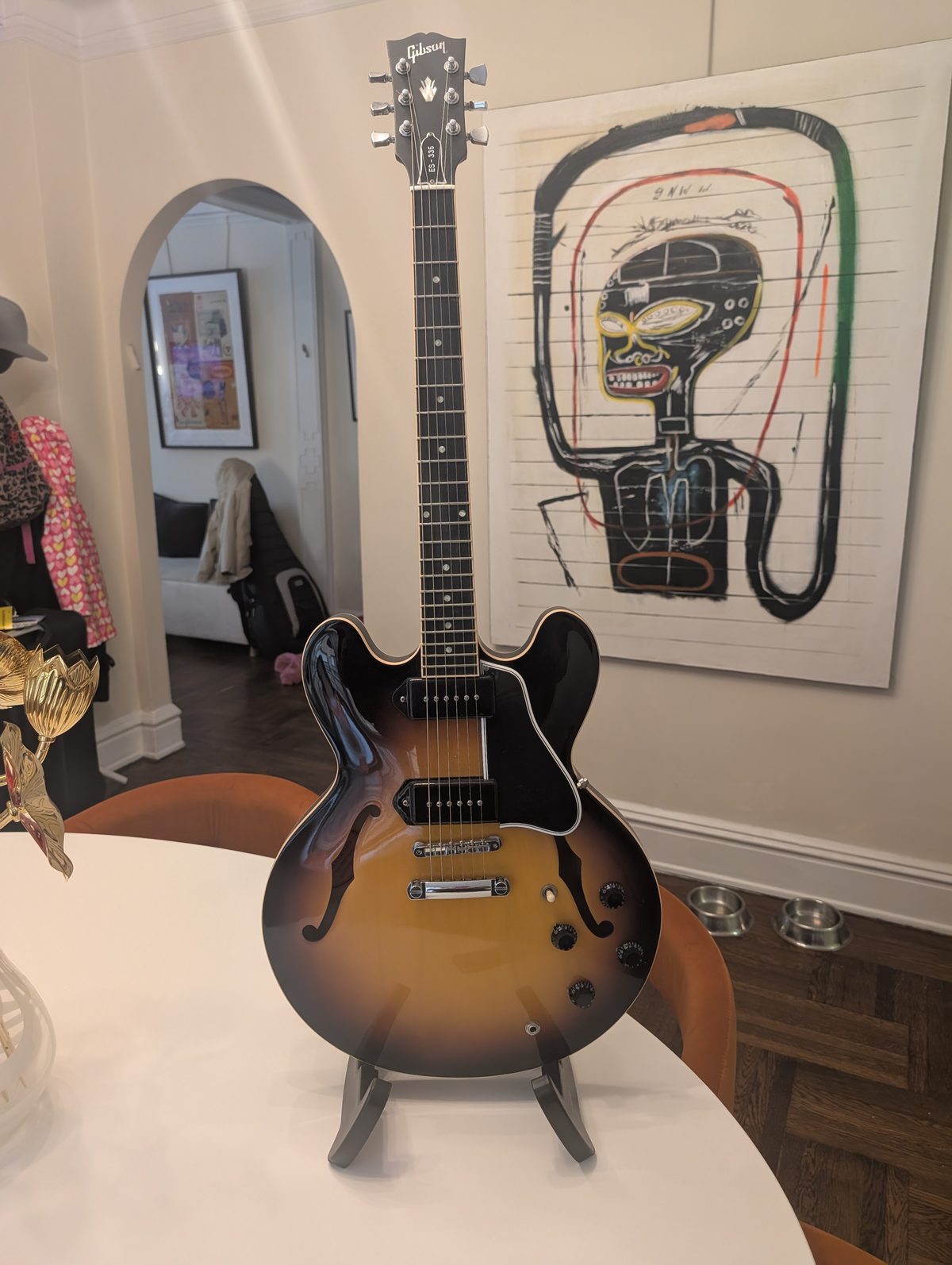
Gibson ES-335 with P-90s: The Rare One, Reviewed After Years of Ownership
A long-term review of the Custom Shop ES-335 with factory dogear P-90s: what the rare pickup swap does to the most famous semi-hollow ever made.