
Fender American Vintage II: USA Build, Vintage-Correct Everything
Every guitar company eventually makes a tier for the customer who doesn’t want “inspired by” a specific year, they want that year, reproduced as closely as a modern factory can manage. American Vintage II is Fender’s most serious attempt at that promise, and it replaced a line that was doing something similar but not quite as far.
Where it sits and what it costs
Street prices land around $2,100-$2,400 as of 2026, above American Ultra II and below Custom Shop. That price gets you specific-year reissues, not a generic “vintage-style” guitar: a ‘51 Telecaster, a ‘57 or ‘61 Stratocaster, a ‘75 Telecaster Custom, and similar year-specific models that reproduce the pickup voicing, hardware, neck shape, and finish process associated with that exact production year as closely as Fender’s modern tooling allows. This tier directly replaced the discontinued American Original series. If you come across an American Original guitar on the used market, it’s a genuine, well-regarded predecessor to this line, not something currently in production, and not something to assume is inferior just because it’s older stock.
What actually separates this from Vintera III
Vintera III, a couple tiers down, chases the same vintage-decade idea but is built in Mexico to a lower budget, using period-inspired specs rather than pursuing period-exact ones. American Vintage II is the same concept executed with USA-level tolerances: nitrocellulose lacquer finishes that age and check the way original lacquer does, period-correct pickup winds and magnet types rather than modern reinterpretations, vintage-spec hardware down to details like saddle design and tuner style, and neck shapes profiled to match the actual year being reissued rather than a modern compromise shape. The difference between the two tiers isn’t “more vintage,” it’s “more accurately vintage,” which matters enormously to the buyer this tier is built for and not at all to most other players.
Notable specifics worth knowing
The ‘61 Stratocaster and ‘63 Telecaster are consistently the most talked-about models in the line for capturing pre-CBS-era Fender feel, and the ‘75 Telecaster Custom with its bound body and wide-range humbucker in the neck position covers a completely different tonal territory than the single-coil models around it. Nitro finishes are worth flagging on their own: they look and age beautifully, but they’re softer than the poly finishes on every tier below this one, meaning normal gig-bag and gigging wear shows up faster and more visibly than on a Player II or even an American Professional II.
Who this tier is for, and who’s overpaying
Buy this if you’re chasing a specific decade’s sound and feel and you know which decade. It’s the right tier for players who already understand what makes a ‘63 Tele sound different from a ‘75 Custom and have a reason to want one over the other. It’s the wrong tier for a player who just likes the general idea of “vintage” without a specific target, since Vintera III delivers 80 percent of that vibe for meaningfully less money, and for anyone who plans to gig hard nightly and would rather not babysit a nitro finish.
A caveat for used buyers
Because this tier sits at a genuine intersection of “still gets played” and “collector-adjacent,” American Original and American Vintage II guitars show up used more often than you’d expect from a guitar this expensive, usually from buyers who upgraded or changed direction. If you’re shopping that market, the used electric guitar checklist matters even more here than usual, since finish checking that’s cosmetic on a well-cared-for nitro guitar can be confused with damage by an inexperienced buyer, and the reverse is also true. For where this tier sits against everything else Fender makes, see the full Fender lineup guide.
Keep reading
-
Acoustic or Electric First? Pick the One You'll Actually Practice
The honest answer to the most common beginner guitar question, including the finger-pain myth, the real costs of each path, and the one factor that predicts who keeps playing.
-
Buying a Guitar Online Without Playing It First: How to Not Get Burned
Reverb, marketplace, and retailer tactics from someone who's bought and sold online for years: what photos to demand, what questions filter sellers, and when to walk.
-
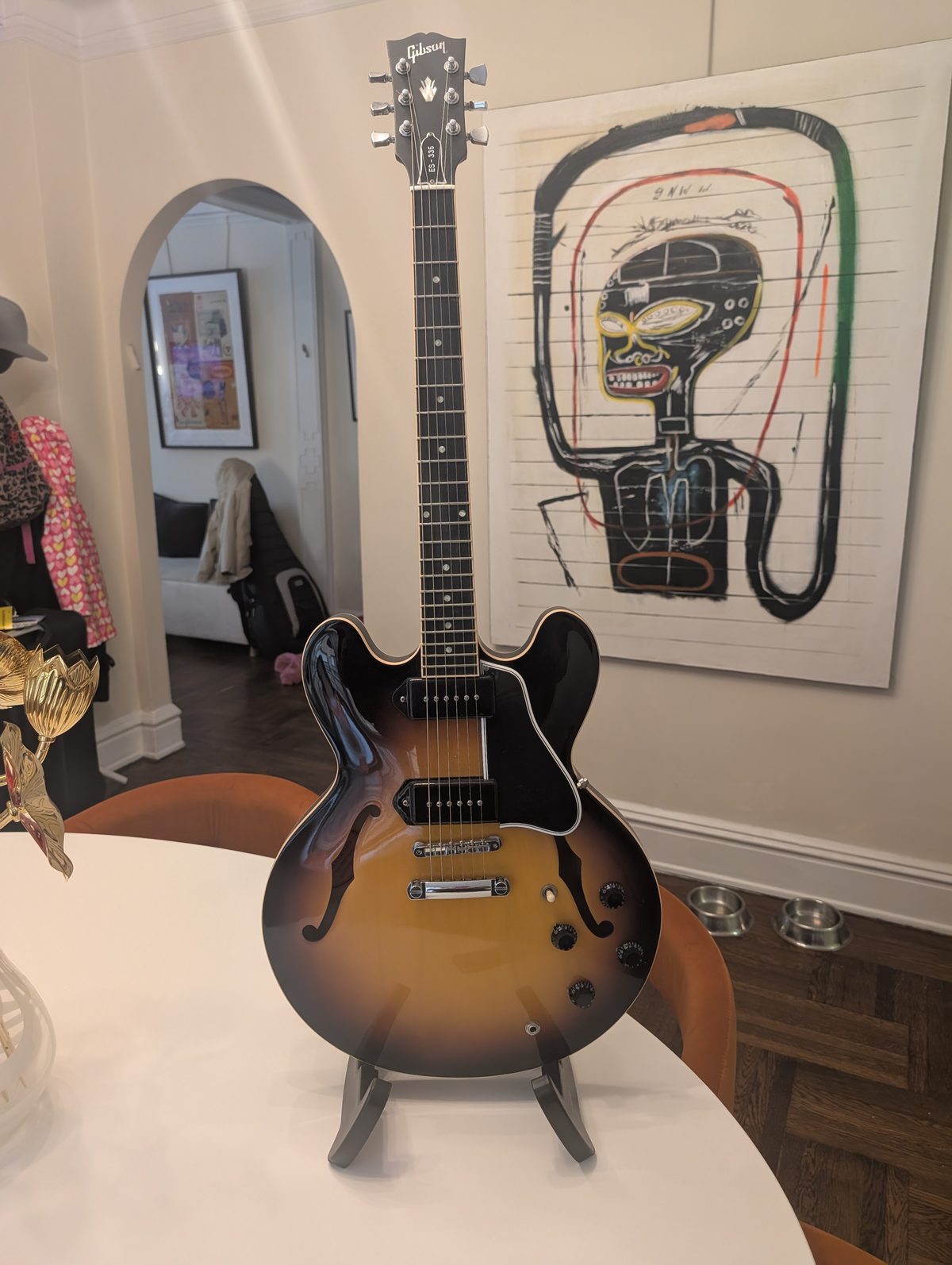
Gibson ES-335 with P-90s: The Rare One, Reviewed After Years of Ownership
A long-term review of the Custom Shop ES-335 with factory dogear P-90s: what the rare pickup swap does to the most famous semi-hollow ever made.