
The Fender Lineup, Explained: Every Tier From Squier Sonic to Custom Shop
Fender’s catalog looks simple from the outside (Squier is cheap, Fender is real) and turns into eleven tiers the moment you start shopping. This is the guide I wish existed when I bought my first one: what actually changes at each price jump, in plain terms, without pretending I’ve personally put hours on every single model in every finish. I’ve owned and played roughly a dozen Fenders and Fender-style guitars over the years, gigged and recorded with several of them, and where this article overlaps with a guitar I actually know, it says so and links to the real review. Everywhere else, this is a positioning and spec guide, not a star rating, because a rating means something only when it’s earned by hours in your hands.
The ladder, top to bottom
Squier Sonic is the true entry point, built to a price for first-time buyers: bolt-on necks, basic pickups, and specs that exist to get a beginner playing without a $300 disappointment. Fine for lessons and figuring out if guitar sticks; almost nobody keeps one long-term, and that’s by design. Full breakdown here.
Squier Affinity sits one step up: better fit and finish than the Sonic, still clearly a budget instrument, still the right call for a kid or a true beginner who might quit in six months. The jump from Sonic to Affinity buys consistency, not tone. Full breakdown here.
Squier Classic Vibe is where Squier stops apologizing. Vintage-correct specs, genuinely good pickups for the price, and build quality that regularly embarrasses guitars twice its cost. I’ve written the full breakdown of what the next $300 buys you over a Classic Vibe, and the short version holds up here too: a well-set-up Classic Vibe is a real guitar, not a stepping stone. More on this tier here.
Squier Paranormal is the fun tier, off-pattern shapes (Cabronita, Baritone Tele, Jazzmaster/Jaguar variants) built for players who already know the classics and want a specific weird tool, not a first guitar. Full breakdown here.
Fender Standard is the newest rung, introduced to fill the gap Squier and Player used to have between them: real Fender badge, Mexican-built, priced under Player. Treat it as “Player-adjacent at a discount” until you’ve played the specific model, because a new tier this fresh varies more guitar to guitar than an established line does. Full breakdown here.
Fender Player II is the mainstream workhorse, and for most gigging and recording players it’s the correct default: modern neck profile, flatter radius for easier bends, upgraded pickups over the original Player, and the fit and finish of a guitar that expects to be used, not admired. If you buy one Fender in your life, statistically it’s probably this one. Full breakdown here.
Fender Player Plus sits above Player II with noticeably hotter pickups, locking tuners, and a rolled fingerboard edge, aimed at players who want more output and more travel-stability without stepping up to the American line. It’s a real, distinct tier, not a discontinued relic; don’t let anyone tell you Player II replaced it. Full breakdown here.
Fender Vintera III is the reissue line, built to authentically replicate specific decades (50s, 60s, 70s) down to the pickup voicing and hardware details, for players chasing a particular era’s sound rather than a modern all-rounder. Vintera III replaced Vintera II with updated specs; if you see a used Vintera II, it’s not obsolete, just the previous generation. Full breakdown here.
Fender American Professional II is the first genuinely USA-built tier: better wood selection, Fender’s V-Mod II pickups, and the kind of consistency that comes from a smaller, more controlled production run. This is where “made in America” stops being a marketing line and starts being a real build difference you can feel. Full breakdown here.
Fender American Ultra II pushes further: contoured heels for upper-fret access, noiseless pickups, and a modern-format neck aimed at players who want maximum comfort and output with zero vintage compromise. It’s the least “traditional” USA Fender and the most ergonomically modern. Full breakdown here.
Fender American Vintage II is the opposite instinct: painstaking period-correct reissues built in America, for players who want the Vintera experience with USA-level authenticity and are willing to pay for it. This tier replaced the discontinued American Original line; if you’re guitar-shopping and see “American Original” used, know it’s a predecessor, not a currently-produced model. Full breakdown here.
Custom Shop is bespoke: Master Builders, wide open spec sheets, and prices that start where American Vintage II ends. This tier isn’t a “better” guitar in the way Player II is better than Affinity; it’s a different kind of purchase entirely, closer to commissioning art than buying gear. Full breakdown here.
Single-coil or humbucker, whatever the tier
The tier ladder answers “how much guitar,” not “what does it sound like.” That second question is pickup physics, not price, and it holds true whether you’re looking at a Squier or a Custom Shop: single-coils give you the most detail and the most honest reproduction of your picking hand, at the cost of hum, and high-output humbuckers exist mainly to drive low-gain amps into saturation, a job that a genuinely great, dynamic amp does without them. I’ve written the long version of that argument separately, because it matters more to your actual buying decision than most of this tier chart does. A Player II Stratocaster and a Player II Telecaster cost the same and sound like different instruments for pickup reasons, not tier reasons.
Where our real reviews overlap
This guide is deliberately objective because I haven’t personally gigged every Fender tier, but a few spots on this ladder connect straight to guitars I have: the Telecaster vs Stratocaster case for the two core single-coil shapes, the Squier Classic Vibe vs Fender Player breakdown for exactly where the entry-tier money goes, and the Reverend Eastsider T vs Fender Telecaster head-to-head, which is the most useful data point in this whole article if you’re Fender-shopping specifically for a T-style: it tells you exactly what a standard Fender recipe gets you that a corrected alternative doesn’t. If you’re buying used at any tier, the used electric guitar checklist applies identically whether the headstock says Squier or Custom Shop.
Who each tier is actually for
Beginner testing commitment: Sonic or Affinity, spend nothing, upgrade later if it sticks. Serious student or budget-conscious gigger: Classic Vibe, and put the saved money into a setup and an amp. Default gigging and recording guitar for most players: Player II. Want more output and travel stability without going USA: Player Plus. Chasing a specific decade’s sound: Vintera III. Want the real USA build quality bump: American Professional II. Want maximum modern comfort and zero-hum output: American Ultra II. Want USA build plus vintage authenticity: American Vintage II. Commissioning your dream spec sheet with a budget to match: Custom Shop.
None of that is a rating. It’s a map. Use it to figure out which specific guitar deserves an actual test drive, then trust your hands over any tier chart, including this one.
Frequently asked questions
What's the difference between Fender Player II and Player Plus?
Player Plus sits above Player II with hotter pickups, locking tuners, and a rolled fingerboard edge. Both are current, current-production tiers; Player Plus did not replace Player II, and Player II did not replace Player Plus. They're parallel options at different price points, not generations of the same guitar.
Is Squier Classic Vibe good enough to gig with?
Yes. Classic Vibe uses vintage-correct specs and genuinely good pickups, and a well-set-up example plays and sounds like a real guitar rather than a stepping stone. The full comparison against Fender's own Player tier is in the Squier Classic Vibe vs Fender Player breakdown.
What replaced the Fender Vintera II?
Fender Vintera III replaced Vintera II with updated specs. A used Vintera II isn't obsolete or broken, it's simply the previous generation of the same reissue line.
Is Fender American Vintage II the same as American Original?
No. American Vintage II replaced the discontinued American Original line. If you find American Original guitars for sale, they're a predecessor model, not a currently produced Fender tier.
What's the cheapest real Fender, not Squier?
Fender Standard is the newest and cheapest tier carrying the actual Fender badge, positioned below Player II and built in Mexico. As a newer tier it's worth extra scrutiny on the specific guitar you're buying, since it hasn't built the same production track record as the more established tiers yet.
Keep reading
-
Acoustic or Electric First? Pick the One You'll Actually Practice
The honest answer to the most common beginner guitar question, including the finger-pain myth, the real costs of each path, and the one factor that predicts who keeps playing.
-
Buying a Guitar Online Without Playing It First: How to Not Get Burned
Reverb, marketplace, and retailer tactics from someone who's bought and sold online for years: what photos to demand, what questions filter sellers, and when to walk.
-
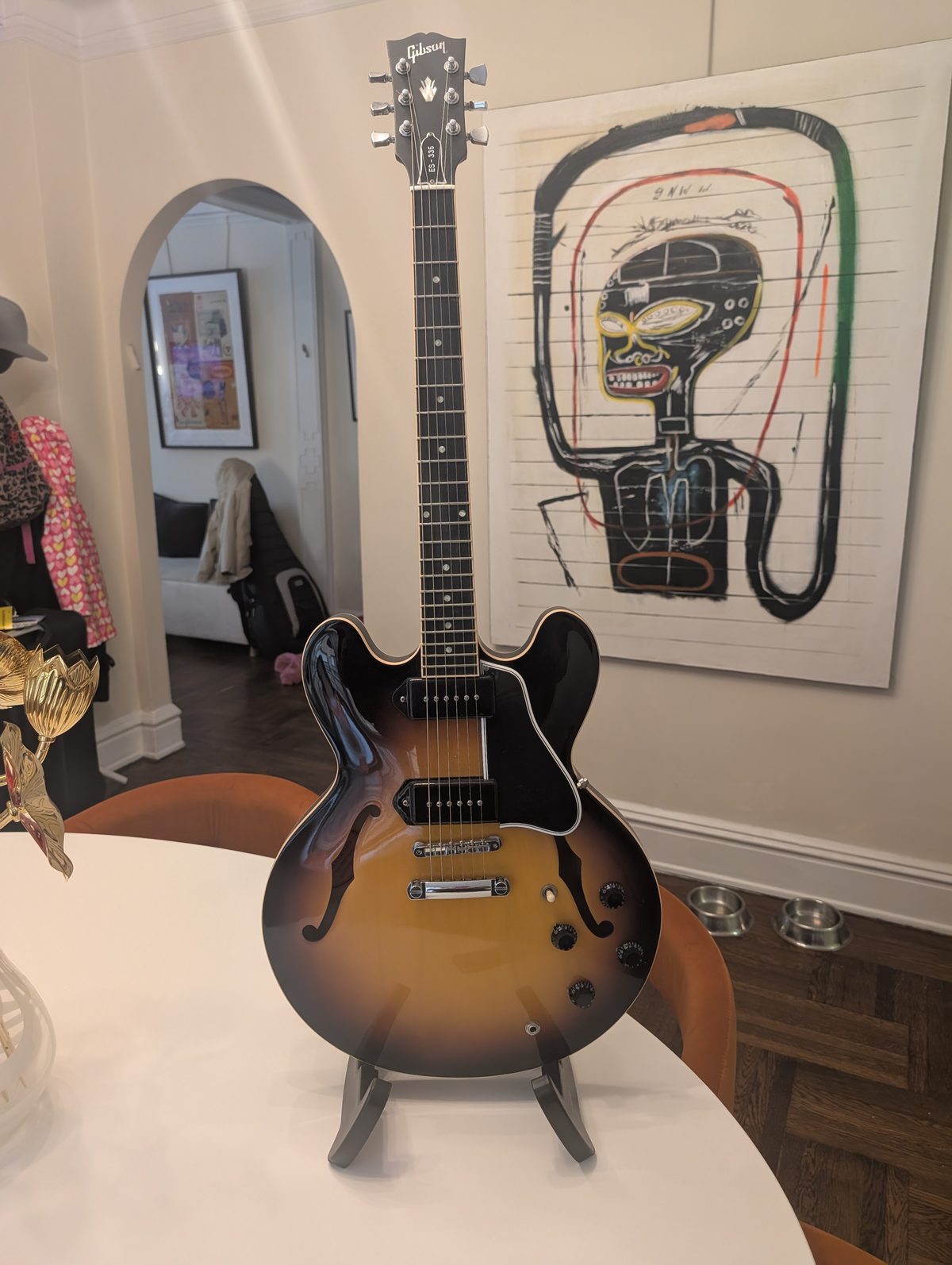
Gibson ES-335 with P-90s: The Rare One, Reviewed After Years of Ownership
A long-term review of the Custom Shop ES-335 with factory dogear P-90s: what the rare pickup swap does to the most famous semi-hollow ever made.