
Fender Custom Shop: What You're Actually Paying For
Somewhere around $3,500, a Fender stops being a product you choose off a wall and starts being a project you commission. That’s the honest way to think about the Custom Shop, and it’s the single most important thing to understand before spending this kind of money: you’re not buying “a better guitar” the way a Player II is better than an Affinity Squier. You’re buying access to a different process entirely, and the guitar that comes out the other end reflects that process as much as it reflects any spec sheet.
Two very different things share the name “Custom Shop”
The phrase covers two genuinely distinct paths, and conflating them is where a lot of buyers get confused about pricing.
Master Built guitars are one-offs, built start to finish by a single named Master Builder to a spec sheet you either choose from their catalog of past work or, at the high end, work out with them directly: wood selection, neck shape, pickup winding, aging level, hardware, everything. Pricing here starts well above the Custom Shop entry point and climbs into five figures without much resistance, because you’re paying for a specific individual’s time, reputation, and hands-on work, not a production process. Buyers in this category are often collectors or working pros with a specific, hard-to-source spec in mind, and the builder’s name carries real weight on resale.
Team-Built guitars, sometimes sold under series names like Time Machine or Postmodern, are Custom Shop specs built by a small team rather than a single named builder, in limited production runs rather than as individual commissions. This is the entry point to Custom Shop pricing, starting around $3,500, and it’s where most buyers who want “Custom Shop quality” without a five-figure budget actually land. You’re still getting hand-selected wood, superior fit and finish, and premium hardware and pickups, just without the one-builder provenance that drives Master Built pricing.
Relic aging, in brief
A meaningful chunk of Custom Shop output is aged to simulate decades of wear, at varying intensity: NOS (new-old-stock, meaning zero aging, just period-correct specs with a fresh finish), Closet Classic (light, believable wear as if the guitar had been played gently for years), Journeyman Relic (moderate wear with some finish checking), and Heavy Relic (aggressive, sometimes theatrical wear meant to look decades old and heavily gigged). None of this changes how the guitar sounds. It’s a cosmetic and tactile choice, some players like a broken-in feel and worn contours, others find it try-hard on a guitar that’s never actually played a gig, and reasonable people land on both sides. What it does change is resale: relic finishes hold value differently than NOS examples, and taste in relic intensity shifts over time the way any aesthetic trend does.
Artist signature models
Custom Shop also produces artist signature instruments, recreations or interpretations of specific players’ guitars, sometimes down to replicated modifications, wear patterns, and non-stock hardware those players actually used. These sit closer to the Master Built end of the spectrum in terms of specificity and price, and they’re a genuinely different buying motivation than the rest of this tier: you’re not choosing specs to build your ideal guitar, you’re buying into someone else’s.
Who should actually spend this money
This tier makes sense for players who know precisely what spec they want and can’t get it anywhere else, players buying into a specific builder’s or artist’s reputation for reasons beyond the wood and wire, and collectors for whom provenance and resale trajectory are part of the purchase, not a side effect of it. It does not make sense for a player who wants “the best regular Fender” for gigging and recording. American Professional II or American Ultra II cover that job at a third of the entry price, and neither the tone nor the playability gap between those tiers and a Team-Built Custom Shop guitar is anywhere near proportional to the price gap. The premium here buys specificity, story, and provenance, not a categorically better instrument.
The honest caveat
Because so much of this tier’s value is tied to builder reputation, spec rarity, and aging trend, the used and collector market for Custom Shop guitars is more opinion-driven and more prone to overpaying than any other Fender tier, and a Custom Shop label alone tells you less than buyers assume about actual condition or fair price. If you’re shopping used at this level, the used electric guitar checklist matters more here than anywhere else on the ladder, not less, precisely because the stakes and the room for a bad deal are both higher. For where Custom Shop sits against every other Fender tier, see the full Fender lineup guide.
Keep reading
-
Acoustic or Electric First? Pick the One You'll Actually Practice
The honest answer to the most common beginner guitar question, including the finger-pain myth, the real costs of each path, and the one factor that predicts who keeps playing.
-
Buying a Guitar Online Without Playing It First: How to Not Get Burned
Reverb, marketplace, and retailer tactics from someone who's bought and sold online for years: what photos to demand, what questions filter sellers, and when to walk.
-
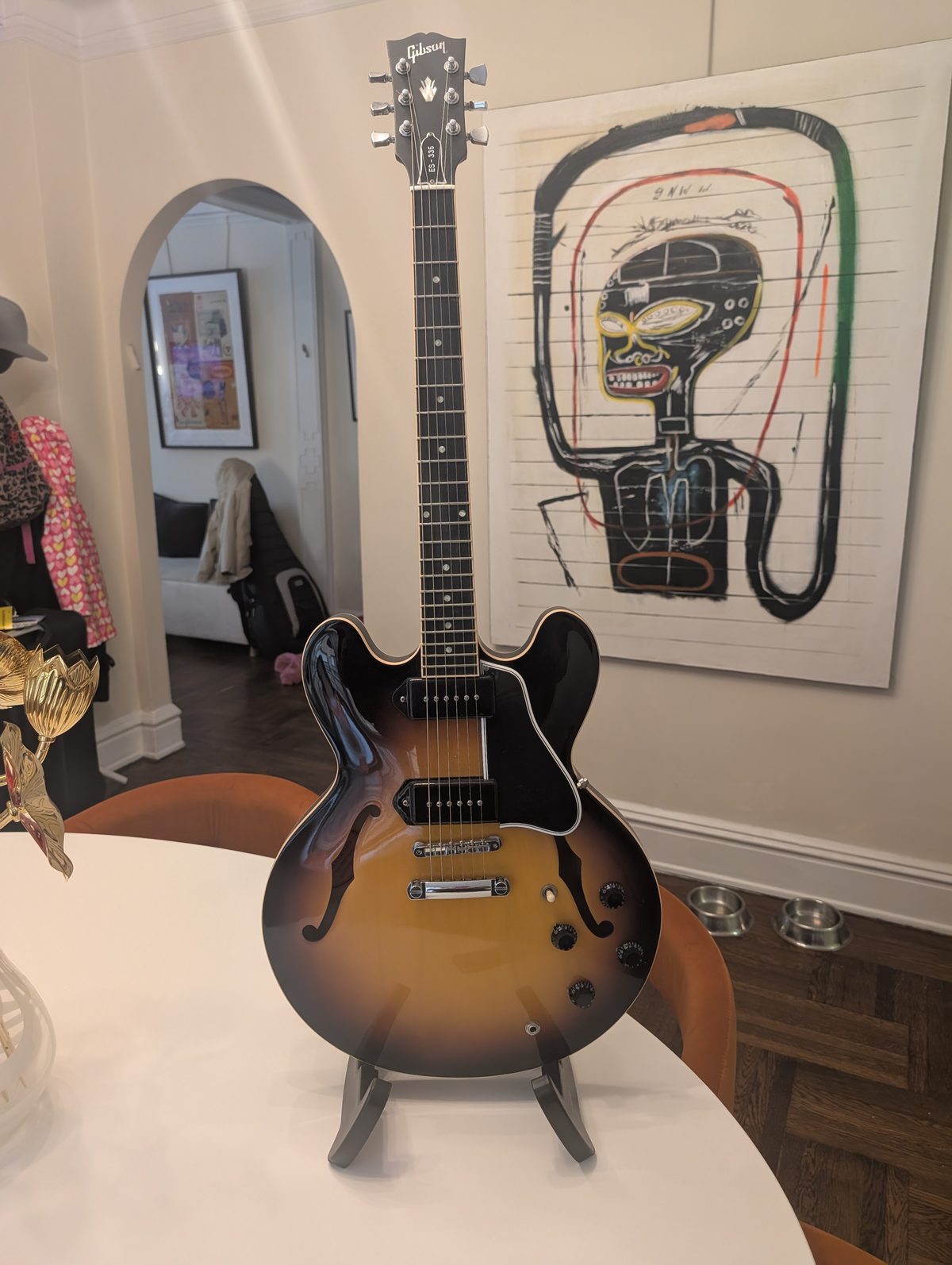
Gibson ES-335 with P-90s: The Rare One, Reviewed After Years of Ownership
A long-term review of the Custom Shop ES-335 with factory dogear P-90s: what the rare pickup swap does to the most famous semi-hollow ever made.