
Fender Standard Series: The Newest Rung on the Ladder, Explained
Fender Standard is the youngest tier in the current lineup, built specifically to close a gap that used to sit open between the top of Squier and the bottom of Player. For years, if you wanted a Fender-branded guitar, Player was the floor, and that left a real price cliff between a $500 Squier Classic Vibe and a $750-plus Player. Standard exists to fill that cliff: a genuine Fender headstock, built in Mexico, priced under Player at roughly $550 to $650 street as of 2026.
What the badge buys you, and what it doesn’t
The honest way to think about Standard is “Player-adjacent at a discount,” not “Player with a haircut.” Bodies are typically poplar rather than the alder or ash you’ll find on Player II, necks are a C-profile maple, and the pickups are ceramic-magnet units built to a cost target rather than the alnico pickups Player II ships with. Hardware follows the same logic: standard die-cast tuners instead of anything sealed or locking, and fewer finish and configuration options than Player offers. None of that makes it a bad guitar. It makes it a guitar where the savings are real and traceable to specific parts, not just a smaller number on the price tag for no reason.
Notable models
The line currently covers the core shapes: the Standard Stratocaster in SSS and HSS configurations, the Standard Telecaster with the usual bridge-and-neck single-coil pairing, and a Standard Jazzmaster that brings the offset shape into the tier for the first time at this price. Finish options run toward the practical end (solid colors, a couple of sunbursts) rather than the deeper catalog Player II and Vintera get.
Who it’s for
Standard is the right call for a player who wants the Fender name specifically, has a firm budget under $650, and is buying primarily on feel rather than resale value or long-term collectibility. It also makes sense as a first “real” Fender for someone stepping up from a beginner Squier who isn’t ready to stretch to Player II pricing. It’s the wrong call for anyone chasing a specific tonal upgrade over a Classic Vibe Squier, because a good Classic Vibe and an entry Standard trade blows more than the badge suggests, and the CV often has the edge on pickup character.
The honest caveat
Because this tier is new, it hasn’t built the track record that Player, Player Plus, and the American lines have earned over a decade-plus of production. Early runs of any new tier tend to show more guitar-to-guitar variance than an established line, simply because the factory hasn’t fully dialed in every finish and configuration yet. That’s not a knock on the concept, it’s a reason to be more hands-on than usual: play the actual guitar you’re buying, or buy from a dealer with an easy return policy, rather than trusting that every Standard off the rack plays like the one you tried at the shop. Fender’s badge is a real quality floor, but on a tier this fresh, the floor is still settling.
For the full picture of where Standard sits against every other Fender and Squier tier, see the full Fender lineup guide.
Keep reading
-

Acoustic or Electric First? Pick the One You'll Actually Practice
The honest answer to the most common beginner guitar question, including the finger-pain myth, the real costs of each path, and the one factor that predicts who keeps playing.
-
Buying a Guitar Online Without Playing It First: How to Not Get Burned
Reverb, marketplace, and retailer tactics from someone who's bought and sold online for years: what photos to demand, what questions filter sellers, and when to walk.
-
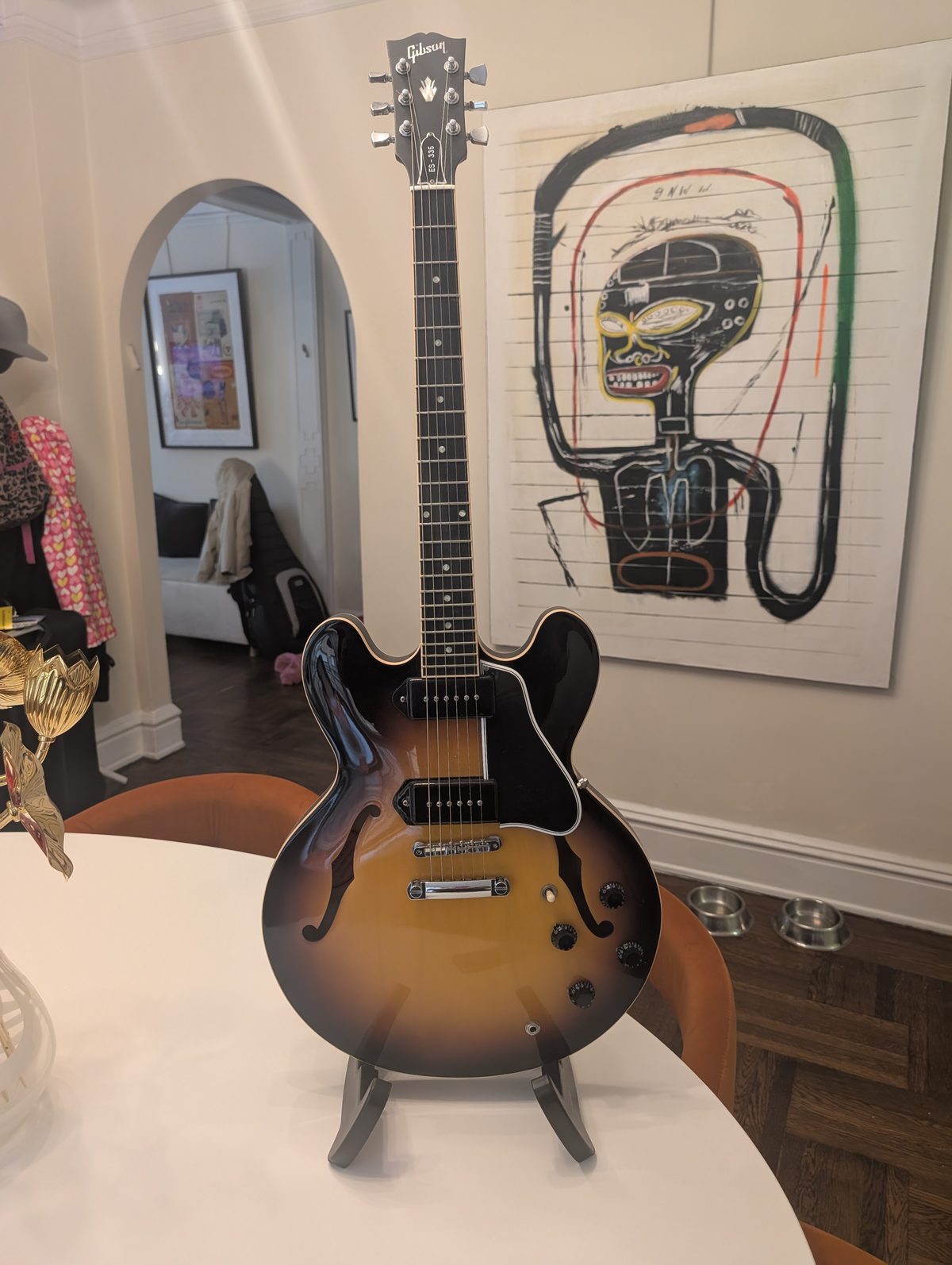
Gibson ES-335 with P-90s: The Rare One, Reviewed After Years of Ownership
A long-term review of the Custom Shop ES-335 with factory dogear P-90s: what the rare pickup swap does to the most famous semi-hollow ever made.