
Squier Classic Vibe: Why It Stops Being a Squier Joke
There’s a specific moment a lot of guitarists go through: picking up a Squier and realizing, somewhat against their own expectations, that it doesn’t play like a $200 guitar. That moment almost always happens with a Classic Vibe in their hands. This is where the Squier name stops being an apology.
What’s actually different here
Classic Vibe runs roughly $430 to $500 street, a real step up from Affinity’s $200-to-$280 range, and the money is visible in the build rather than in marketing copy. Bodies and necks are built to vintage-correct specs, period-accurate radii, profiles, and proportions modeled on specific decades rather than a generic “Strat shape.” The pickups are the biggest jump: alnico or vintage-flavored ceramic units voiced to sound like an actual vintage-style pickup rather than a generic loud one, and they hold their own against guitars costing two or three times as much. Fret work, finish quality, and hardware (real vintage-style tuners and bridges rather than simplified versions) are all a clear tier above Affinity, and the consistency across recent production runs has gotten genuinely impressive. This is also the point where a Squier starts drawing a real comparison to Fender’s own Player series rather than to other Squiers, which is exactly the argument covered in full in Squier Classic Vibe vs Fender Player: where that extra $300 over a Classic Vibe actually goes, and whether it’s worth it for a given player.
Notable models
The Classic Vibe ’50s and ’60s Stratocasters and Telecasters are the heart of the line and the ones most players land on, each tuned to a specific era’s spec sheet down to pickup voicing and neck shape. The Classic Vibe ’70s Telecaster Deluxe brings the wide-range humbucker era into the tier at a price nobody else touches for that sound. And the Classic Vibe Jazzmaster and Jaguar variants matter because they’re often the cheapest way to get a genuinely accurate version of those offset shapes, not a simplified interpretation of one.
Who this is for, and who’s overpaying by skipping it
Classic Vibe is the right call for a serious student, a budget-conscious gigging player, or honestly, plenty of experienced players who know exactly what they want and don’t feel any need to pay Fender-badge prices to get it. If the plan is to put saved money into a proper setup, a decent amp, or lessons, this tier lets that budget stretch further than a Player-tier purchase would.
Where it’s the wrong move: someone shopping specifically for resale value or a logo that reads as prestige to other players. Fender’s own name still holds resale better than Squier’s, even at this quality level, so a player who trades gear often or cares what the headstock signals to bandmates should factor that in. It’s a real cost, just not a tonal or build-quality one.
The honest caveat
Classic Vibe is made overseas in high-volume factories, and while recent consistency is genuinely good, “genuinely good” isn’t “guaranteed.” Play before you buy if you can, and if buying used, the used electric guitar checklist applies here exactly as it would to any other guitar, and the used market for Classic Vibe specifically is one of the better values in electric guitars right now, since resale prices haven’t caught up to how good current production actually is.
For where Classic Vibe fits against the rest of the Fender and Squier ladder, see the full Fender lineup guide. And if the shape question (Tele or Strat) is still open at this tier, that comparison holds regardless of price point.
Keep reading
-

Acoustic or Electric First? Pick the One You'll Actually Practice
The honest answer to the most common beginner guitar question, including the finger-pain myth, the real costs of each path, and the one factor that predicts who keeps playing.
-

Buying a Guitar Online Without Playing It First: How to Not Get Burned
Reverb, marketplace, and retailer tactics from someone who's bought and sold online for years: what photos to demand, what questions filter sellers, and when to walk.
-
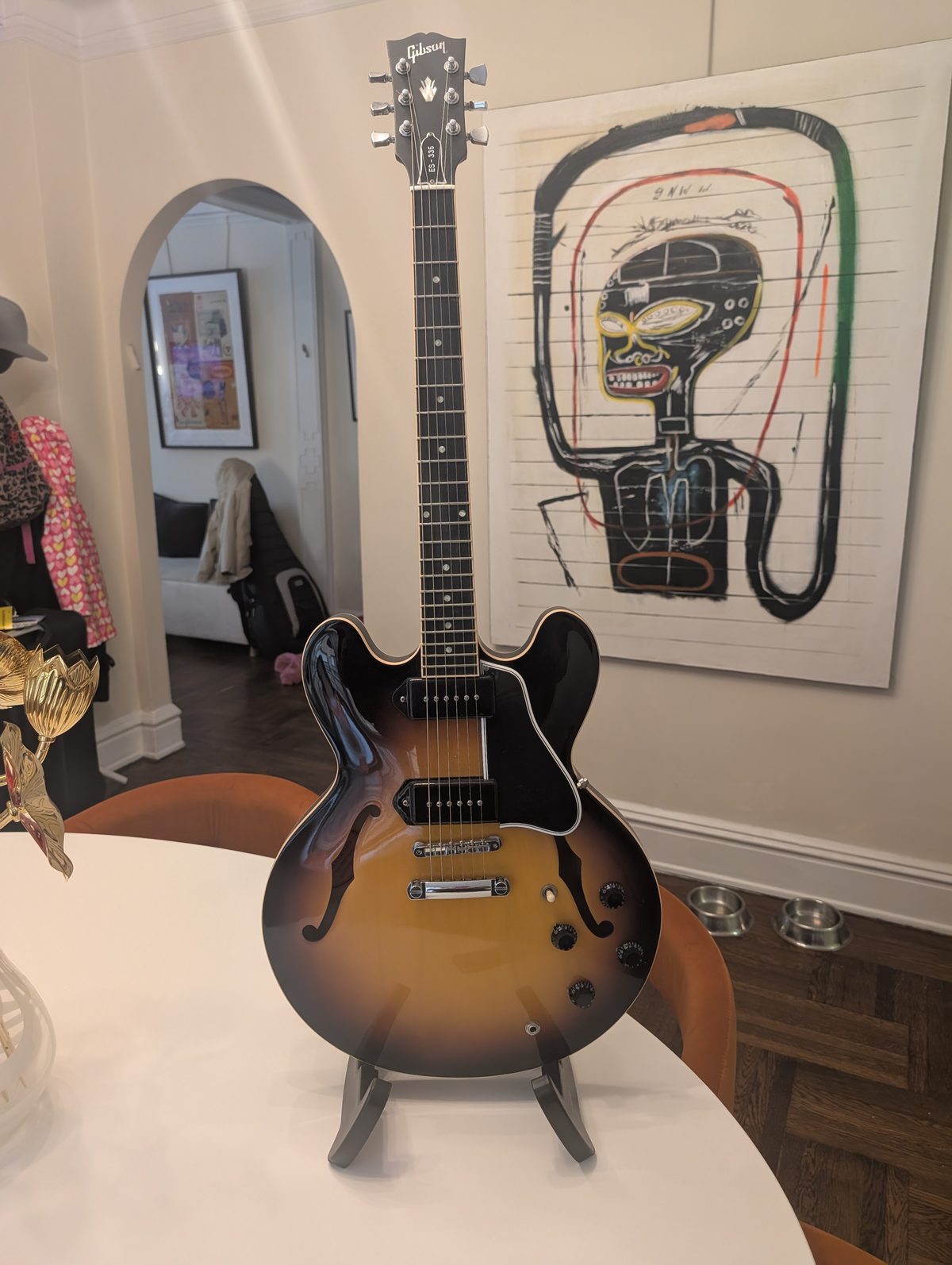
Gibson ES-335 with P-90s: The Rare One, Reviewed After Years of Ownership
A long-term review of the Custom Shop ES-335 with factory dogear P-90s: what the rare pickup swap does to the most famous semi-hollow ever made.