
Your First Pedalboard for Under $200 (Buy in This Order)
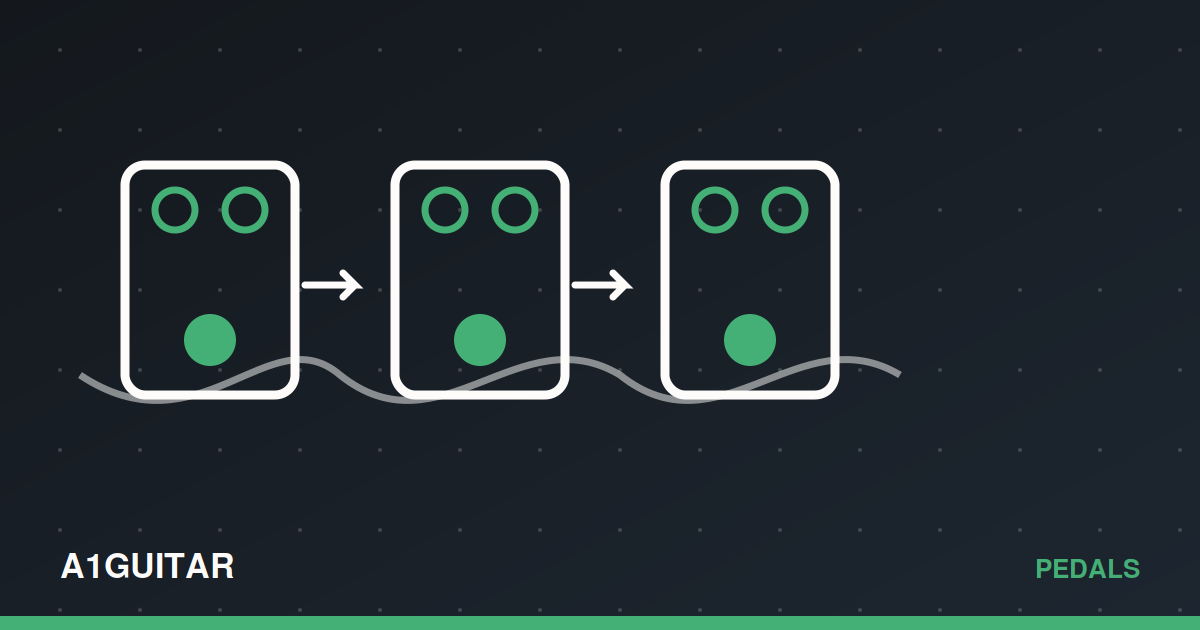
First pedalboards fail in one of two ways: paralysis (six months of YouTube comparisons, zero pedals) or the shotgun (eight $30 mystery pedals that all sound like bees). The fix for both is buying in a deliberate order, one pedal at a time, letting each purchase teach you what the next one should be. Here’s the order, with a budget that lands under $200 total.
Before anything: check what you already own
If you play through a modeler or a multi-effects-equipped amp (a Katana, a Spark, anything from the apartment gear guide), you already own dozens of pedals. Spend a week abusing the built-in effects and notice which ones you actually reach for. That’s free market research on yourself, and it usually reorders this whole list. Boards make the most sense in front of pedal-friendly amps or for sounds your modeler does poorly.
Purchase one: a tuner pedal (~$25 to $50)
Unglamorous, permanent, first. A pedal tuner (used TC Electronic PolyTune, or any of the accurate budget clones) means always-available silent tuning and a mute switch for guitar changes. It also future-proofs the front of your chain, where fussy fuzzes aside (pedal order guide has the exceptions), the tuner lives forever. Nothing makes you sound better per dollar than being in tune; ask anyone who mixes open-mic recordings.
Purchase two: one drive you love (~$40 to $70)
Not three drives. One. The classic circuits (Tube Screamer-style, SD-1-style, Blues Breaker-style) are all available as superb budget versions now; the sub-$50 shelf in 2026 is dramatically better than it was a decade ago. Pick by the players you love (their interviews will name the circuit), buy used if possible, and then spend two weeks learning how it stacks with your amp’s own gain and your guitar’s volume knob. That knob interaction is where drive pedals actually live, and no demo video teaches it.
Purchase three: the ambience multi (~$60 to $90)
Here’s where the modern budget cheat code kicks in: instead of separate delay and reverb pedals (each a real purchase), the current crop of budget digital multis gives you both, in one box, in stereo, with sounds that would’ve cost $400 in 2015. This single box handles the entire back half of your signal chain and covers everything from slapback to shoegaze while you figure out which specific time-effect personality you are.
What you deliberately skipped
A compressor (real, but a refinement, not a foundation), modulation (your future fourth purchase, chosen once the drive and delay have shaped your sound), a fancy power supply (a basic daisy chain is fine for three pedals; isolated power becomes worth it around pedal five, when digital and analog start humming at each other), and the board itself (three pedals live happily on a $15 plank of pedalboard tape; buy the real board when you know the size of the problem).
The running total and the used-market multiplier
Tuner $40, drive $55, ambience multi $80, cables and tape $25: about $200, and every piece survives into whatever your board becomes. Buy used and the same board lands closer to $140; pedals are the safest used gear there is, since they either work or they don’t, and the used-gear inspection mindset takes two minutes per pedal: plug in, hit the switch, sweep the knobs, wiggle the jacks.
One pedal at a time. Each one earns the next. That’s how boards get good instead of big.
Keep reading
-
Pedal Order Explained: The Signal Chain That Makes Everything Sound Better
The standard pedal order, why it works, and when to break it. Tuner, drive, modulation, delay, reverb, plus where loopers, wahs, and fuzz actually go.
-
Acoustic or Electric First? Pick the One You'll Actually Practice
The honest answer to the most common beginner guitar question, including the finger-pain myth, the real costs of each path, and the one factor that predicts who keeps playing.
-
The Apartment Guitarist's Gear Guide: Great Tone Without the Volume
How to get amp tone you love at apartment volume: modelers, headphone rigs, low-watt amps, and what to skip. Real budgets, honest tradeoffs.