
Gibson USA Modern Collection: Same Shapes, Fewer Vintage Compromises

Take the exact same body shapes Gibson has built for seventy years and ask what a player in 2026, rather than 1959, would actually want out of them. That’s the entire premise of the Modern Collection, and it’s a more interesting engineering exercise than it sounds, because Gibson had to decide how far to push “modern” before the guitar stopped feeling like a Gibson at all.
Pricing and where it sits
Street price runs roughly $1,900 to $2,700, a modest premium over Original Collection for the same model, since the changes here are mostly in shaping and electronics rather than materials cost. It’s a lateral move on the ladder, not a step up in build quality, worth remembering before assuming “Modern” automatically means “better.”
What actually changes
The neck is the biggest shift. Modern Collection necks run slimmer than the vintage-spec carves on Original Collection, and several models add asymmetrical contours, thicker on the bass side for support, thinner on the treble side for speed, which is a shape borrowed straight from the superstrat world rather than Gibson’s own history. Compound-radius fretboards show up on some models too, flatter toward the upper frets where vintage-style rounded boards start choking out bends. Electronics get the bigger practical upgrade: push-pull coil-splitting, phase switching, and other wiring options that Original Collection simply doesn’t offer, because vintage-correct wiring didn’t have them either. Some models add a 24th fret or a more contoured neck heel for upper-register access a vintage Les Paul was never designed to give you.
Notable models
The Les Paul Modern is the clearest statement of intent: asymmetrical slim-taper neck, compound radius board, push-pull coil-splitting on both pickups, and a contoured heel and belly cut that no vintage-spec Les Paul has ever had. The SG Modern applies the same logic to Gibson’s lightest solid body, adding coil-split switching and a flatter, faster board to a shape that was already comfortable. If coil-splitting is the feature drawing you to this tier, it’s worth reading why pickup output isn’t the same thing as pickup quality first: a split humbucker gets you closer to single-coil wiring, but it’s still a humbucker’s coil doing the work, not a real single-coil’s construction, and the tonal gap between the two is bigger than the marketing copy usually admits.
Who should buy this, and who shouldn’t
Buy Modern Collection if you love Gibson’s tone and body shapes but have always found the vintage-spec necks or lack of switching options genuinely uncomfortable to play, not just theoretically old-fashioned. It’s the right call for a working player who wants Gibson thump with modern access and flexibility, and doesn’t care about historical accuracy as a value in itself. It’s the wrong call for a player chasing vintage authenticity: every feature that makes this tier appealing is a feature that vintage-spec players specifically don’t want, and buying Modern Collection to “get closer” to a vintage tone is backwards, since the changes here are mechanical, not tonal.
The honest tradeoff
Some players feel Modern Collection guitars lose a bit of the character that makes a Gibson feel like a Gibson: thinner satin nitro finishes in place of gloss, a more contemporary heel that changes the classic Les Paul silhouette from the back, an asymmetrical neck that some hands love and others find fussy after a few songs. None of it is a defect, it’s a genuine design tradeoff, and the honest advice is to play one before assuming modern automatically means better for your hands specifically.
To see how this tier compares against Original Collection, Custom Shop, and Epiphone’s whole range, check the full Gibson and Epiphone lineup guide.
Keep reading
-

Acoustic or Electric First? Pick the One You'll Actually Practice
The honest answer to the most common beginner guitar question, including the finger-pain myth, the real costs of each path, and the one factor that predicts who keeps playing.
-

Buying a Guitar Online Without Playing It First: How to Not Get Burned
Reverb, marketplace, and retailer tactics from someone who's bought and sold online for years: what photos to demand, what questions filter sellers, and when to walk.
-
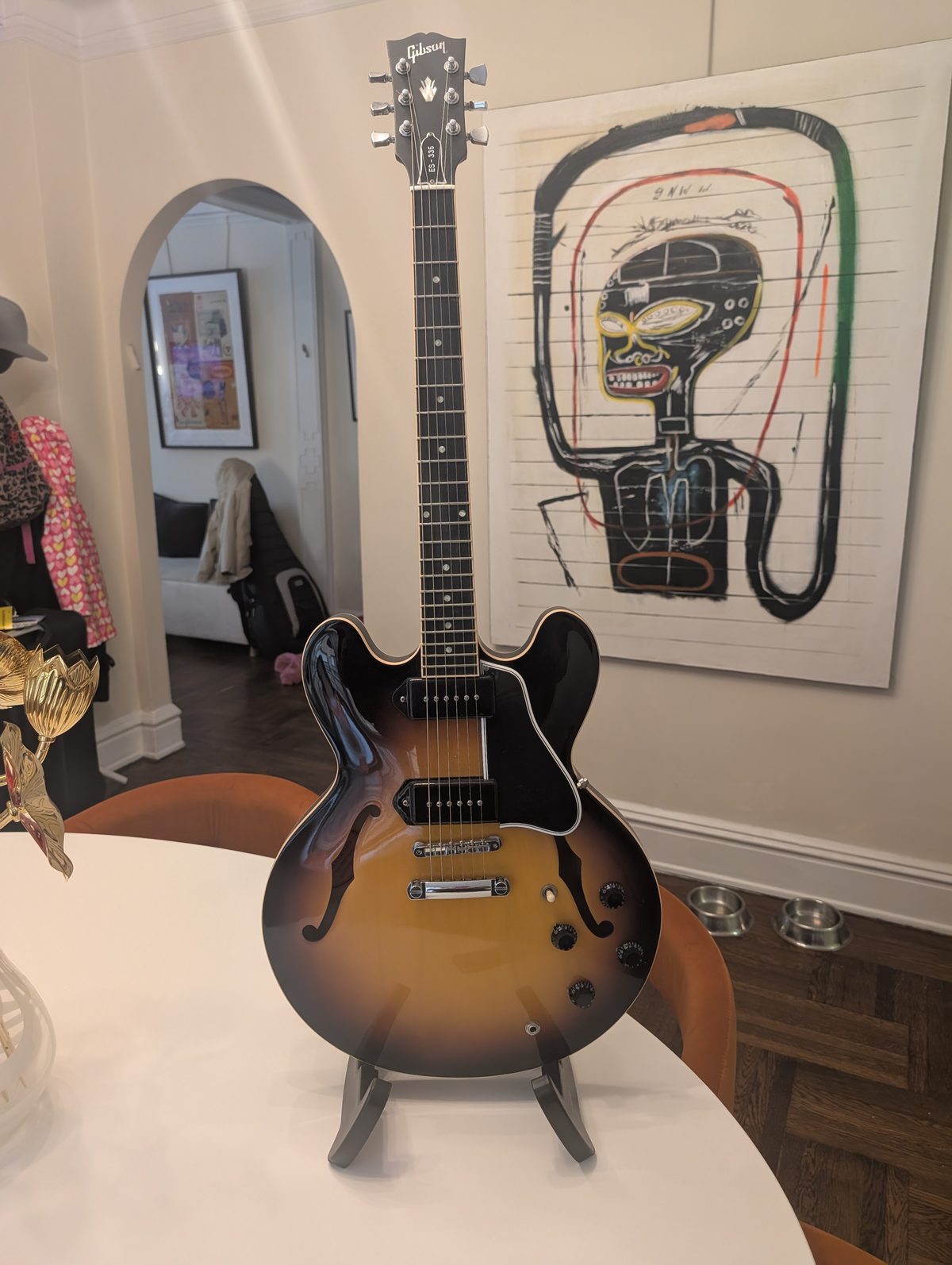
Gibson ES-335 with P-90s: The Rare One, Reviewed After Years of Ownership
A long-term review of the Custom Shop ES-335 with factory dogear P-90s: what the rare pickup swap does to the most famous semi-hollow ever made.