
Mesa Subway Rocket Retrospective: The Amp That Beat the NYC Stairs Test
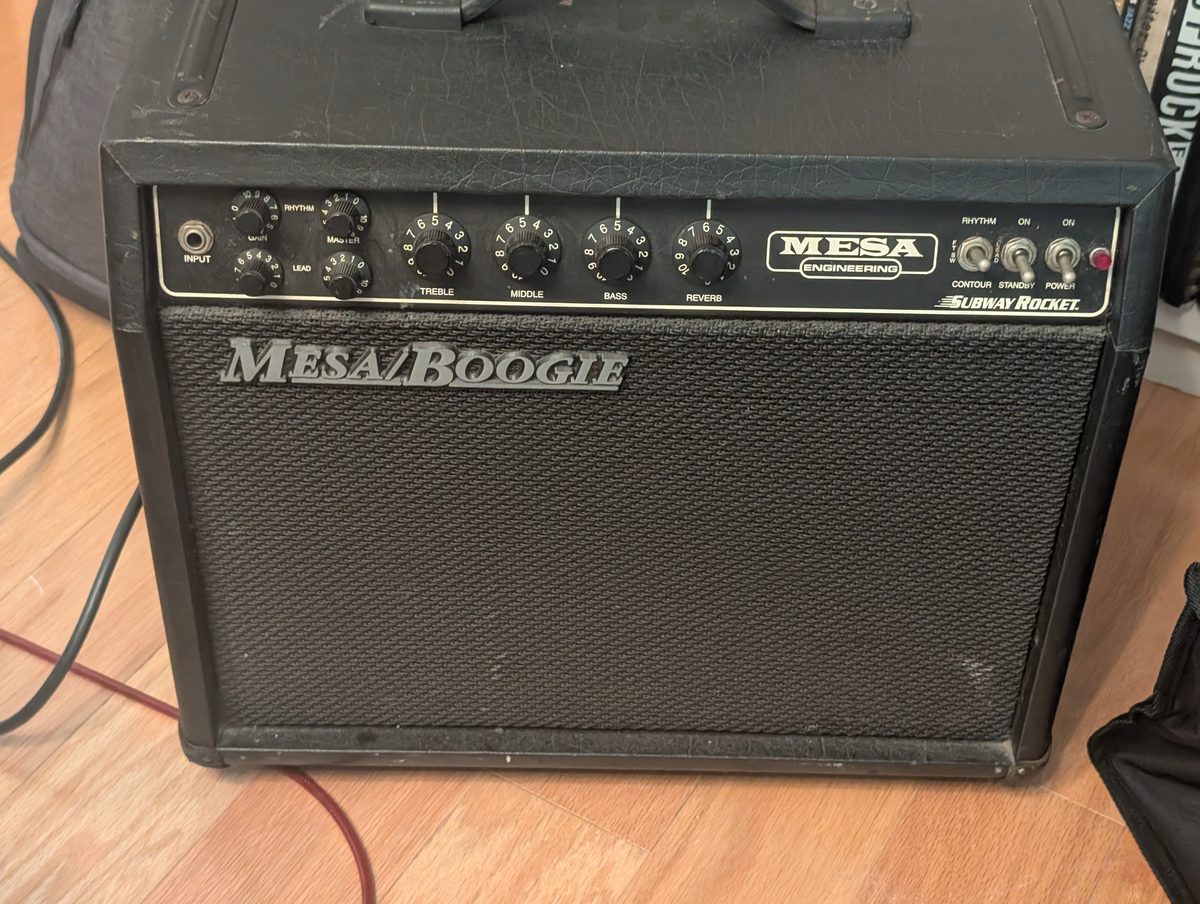
Every amp in a collection has a job title, and the Mesa Subway Rocket’s was never “best sound in the house.” Its title was the amp that gets down the stairs, and in New York City, that’s not a consolation prize, it’s a career. This is a retrospective on Mesa’s little 1x10 from the Subway series, written by someone who hauled one to more gigs than amps three times its price ever saw.
The Subway Rocket: named for exactly the life it ended up living.
Why it entered the rig
The purchase logic was pure NYC physics: apartment stairs, subway stairs, venue stairs, no car. A compact all-tube combo you can carry one-handed while your other hand has the guitar, that’s the whole pitch, and the Subway Rocket delivers it better than almost anything of its era. Mesa even named the series correctly, which is more than some brands managed. My Superdrives sounded better and stayed home pouting; the Mesa went to work.
What it’s actually good at
It’s an easy, portable, genuinely all-tube amp that sounds reasonably good, and I choose those words with care. “Reasonably good” from a box this size, this light, with real tubes in it, was a minor miracle in its day and still beats the small-amp field of its era. The cleans and the lower-gain drive do that fast, tight, compressed Mesa thing, which cuts through a bar-gig mix and takes pedals fine. Where it hits its wall: the highest-gain voice was never usable for me, too metally and trebly, all sizzle where my Budda-calibrated ears want throat. If your reference points are more Rectifier than Plexi, your mileage will differ; that top channel is aimed at a player I’m not. The honest usage pattern, like so many multi-channel amps, was living on the modes that work and pretending the other one is a tuner.
The road years
This was my sit-in amp, and I mean tons of sit-in gigs: the show up, plug in, play three songs, hang, carry it home nights that are half of a working NYC player’s calendar. That duty cycle is the Subway Rocket’s true spec sheet. It started every night, survived every cab trunk and staircase, and never once was the reason a gig went badly, which is the highest compliment a utility amp can earn. Amps that sound 10% better and weigh 40 pounds more simply don’t get taken to those gigs, and an amp that stays home has a sound quality of zero.
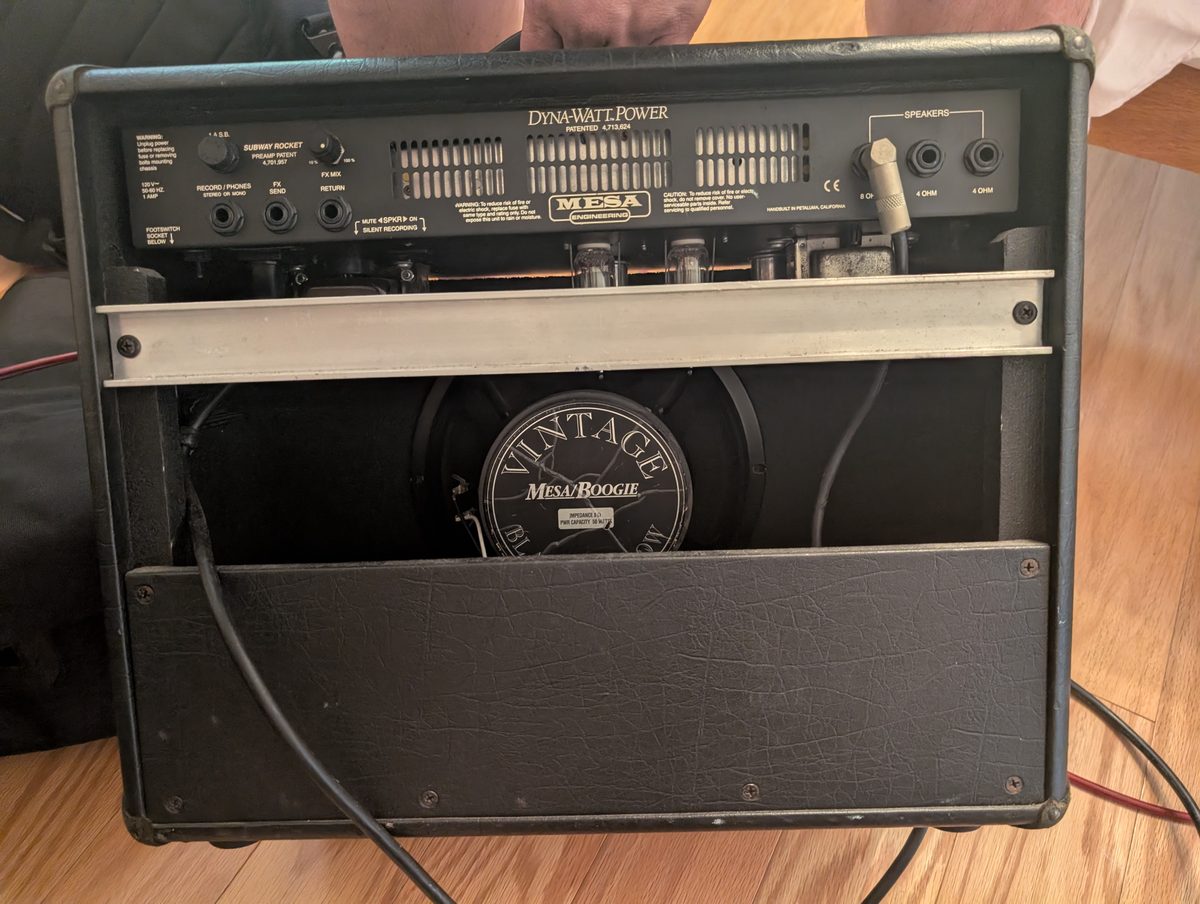 Decades of stairs and not dead yet. Mesa build quality is real.
Should you buy one today
Used, these trade around $600 to $700, and at that price the buyer profile is specific: tube aficionados who need to get around. City players, sit-in regulars, anyone whose amp decision is gated by stairs and shoulders, and who wants actual glass in the box while staying portable. Run the used tube amp checklist on any candidate (these are old enough that caps and tubes matter), expect to live on its friendlier voices, and enjoy owning the rare Mesa that fits in a hatchback’s footwell.
The honest modern caveat: the job this amp was hired for in the 90s is exactly the job modelers and FRFR now do with less weight and more sounds, which is why the price stays civilized. But some players want the valve thing, full stop, portable, and for them the Subway Rocket remains what it always was: not the best amp you’ll ever own, but very possibly the most used one. There are worse legacies.
Keep reading
-
The Apartment Guitarist's Gear Guide: Great Tone Without the Volume
How to get amp tone you love at apartment volume: modelers, headphone rigs, low-watt amps, and what to skip. Real budgets, honest tradeoffs.
-
Budda Superdrive Review: The Most Underrated Amp on the Planet (I Own Three)
A long-term owner's review of the Budda Superdrive SD18, SD30, and SD80: the Plexi-meets-Dumble sound, why the world overlooked it, and how to buy one used.
-
What Is an FRFR Speaker? The Missing Piece of Your Modeler Rig, Explained
FRFR means full range, flat response: a neutral powered cab that lets your modeler's cab sim do the talking. What it is, why it feels different, and how to pick one.