
Nitro vs Poly Finish: Does It Actually Change the Tone?

Few guitar debates generate more confident claims per square inch than nitro versus poly, and most of them are about tone, which happens to be the one place the evidence is thinnest. Here’s what the two finishes actually are, what they genuinely do differently, and an honest answer on the tone question that won’t make either camp happy.
What the finishes actually are
Nitrocellulose lacquer is the older technology, the finish on essentially every vintage guitar collectors chase: a thin, hard, brittle coating sprayed in many light coats, that continues to slowly harden and shrink for years after it’s applied. It’s more labor-intensive to apply correctly, more toxic to spray (heavily regulated now, part of why it’s less common on budget instruments), and meaningfully less durable in the everyday sense: it chips, checks (the fine cracking pattern collectors love), and wears through at contact points faster than poly.
Polyurethane (and polyester, often grouped together as “poly”) is the modern default: a thicker, harder, more chemically stable coating that cures fully and stays essentially unchanged for decades. It’s cheaper and faster to apply at scale, which is a real part of why nearly every budget and mid-range guitar built today wears poly, and it shrugs off the dings, spills, and general abuse that would chip a nitro finish immediately.
The differences that are real and not in dispute
Durability goes decisively to poly: it resists dings, checking, and finish wear in ways nitro structurally cannot, which is exactly why gigging musicians who don’t want to babysit a guitar’s finish often prefer it. Nitro’s aging process is real and visible: it yellows, checks, and wears through at the edges and contact points over years of play, which is precisely the “relic’d” look guitarists pay extra for on purpose, and which poly simply does not replicate naturally, since it doesn’t age the same way. Feel is the most subjective of the real differences: nitro is thinner and, players who prefer it will tell you, feels more like bare wood under the hand, especially on a well-worn neck, while poly’s thicker coat can feel slightly more like plastic, particularly on a brand-new, unplayed neck.
The tone question, honestly
This is where the debate gets loud and the evidence gets thin. The theoretical case for a difference is real: a thinner, harder finish should, in principle, let the wood resonate slightly more freely than a thicker, more rigid one, and it’s not an unreasonable hypothesis. But controlled blind comparisons, the kind that isolate finish as the only variable while holding wood, hardware, pickups, and setup constant, have consistently failed to show a difference listeners can reliably identify, and the honest read of the evidence is that if a real effect exists, it’s small enough to be swamped by every other variable in a guitar: the specific piece of wood, the pickups, the setup, the strings, all of which matter enormously more than finish chemistry. Compare that to a variable with an actually well-established, physically explainable effect on tone and feel, like scale length, and the finish debate looks a lot more like folklore wearing a lab coat.
What this means for buying a guitar
Choose based on durability and aesthetics, because that’s where the real, provable differences live. Gigging player who doesn’t want to worry about a finish chipping on load-in night: poly, without hesitation. Player who wants a guitar that ages and wears in visibly over decades, and doesn’t mind babying it a little more: nitro is the honest choice for that specific desire, aging character, not a tone upgrade. Player shopping by tone alone: spend the mental energy on pickups, wood, and a proper setup instead, because that’s where the differences you can actually hear are hiding. The vintage guitars everyone reveres happen to wear nitro because that’s what existed when they were built, not because nitro is why they sound the way sixty years of the right wood, hardware, and being played constantly made them sound.
Keep reading
-

Acoustic or Electric First? Pick the One You'll Actually Practice
The honest answer to the most common beginner guitar question, including the finger-pain myth, the real costs of each path, and the one factor that predicts who keeps playing.
-

Buying a Guitar Online Without Playing It First: How to Not Get Burned
Reverb, marketplace, and retailer tactics from someone who's bought and sold online for years: what photos to demand, what questions filter sellers, and when to walk.
-
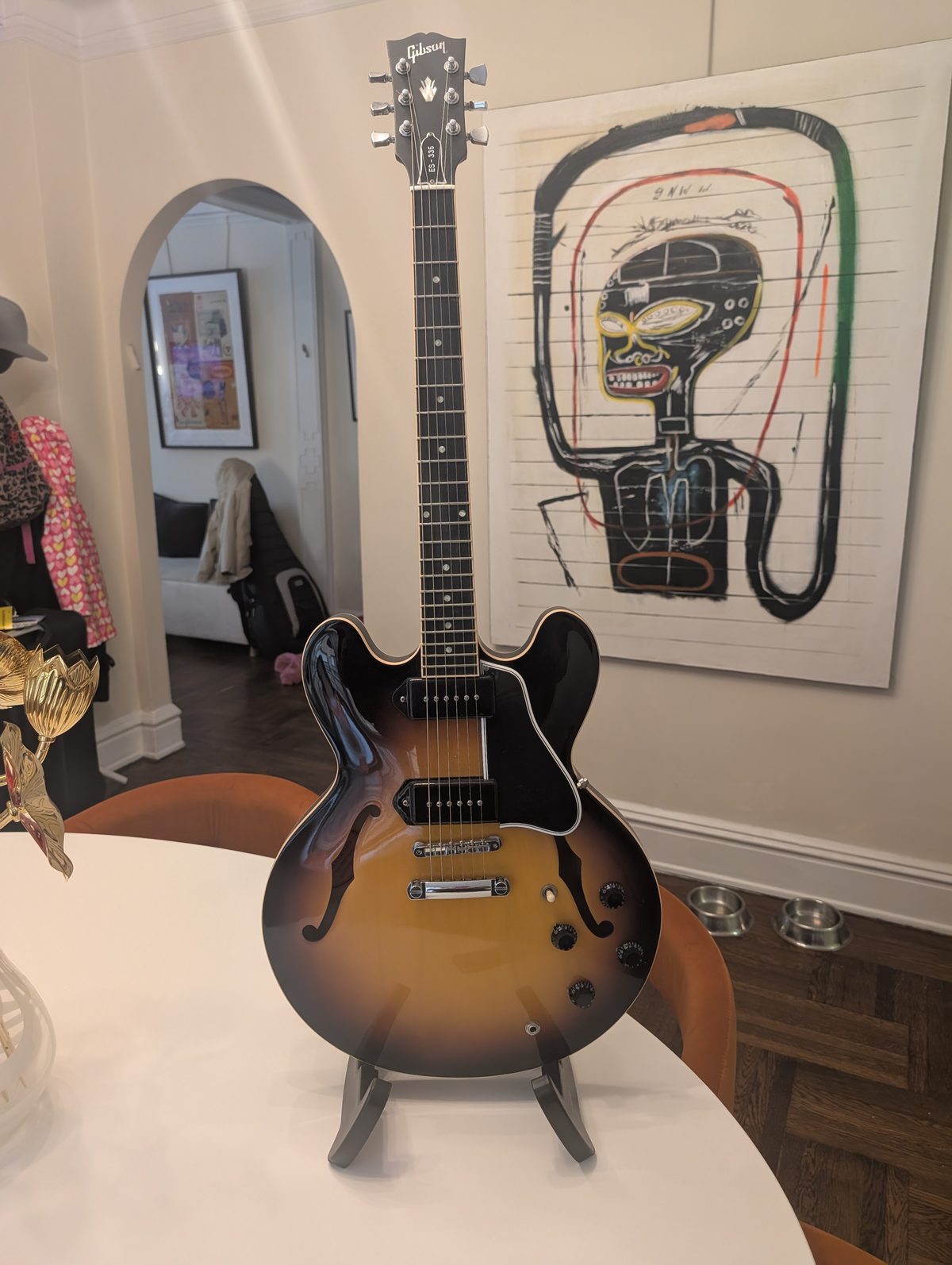
Gibson ES-335 with P-90s: The Rare One, Reviewed After Years of Ownership
A long-term review of the Custom Shop ES-335 with factory dogear P-90s: what the rare pickup swap does to the most famous semi-hollow ever made.