
Scale Length Explained: 25.5" vs 24.75" and What It Actually Changes
Scale length is the spec most beginners skip past entirely, right up until they play two guitars that should feel identical (same neck width, same fret count, same strings) and can’t explain why one feels tighter and brighter and the other feels looser and warmer under their fingers. That’s scale length doing its quiet work, and it’s worth understanding on purpose instead of by accident.
What it actually is
Scale length is the distance from the nut to the bridge, the vibrating length of an open string, and it’s a genuinely different measurement from the guitar’s total length or fret count; two guitars can have identical 22-fret necks and still have different scale lengths because the fret spacing itself is calculated differently to fit the scale. Fender’s standard is 25.5 inches; Gibson’s standard is 24.75 inches. Plenty of builders split the difference (PRS at 25 inches is the famous example) specifically to blend the character of both.
Why three-quarters of an inch matters this much
Tuned to the same pitch, a longer scale needs more string tension to reach that pitch than a shorter scale does, because a longer vibrating length requires more tension to produce the same frequency. That tension difference cascades into nearly everything players notice: longer scale (25.5”) strings feel tighter and stiffer under the fingers at the same gauge and tuning, which translates to a brighter, snappier, more percussive attack with faster note decay, exactly the ingredient behind the classic Telecaster and Stratocaster snap. Shorter scale (24.75”) strings feel looser and more give-y at the same gauge and tuning, translating to a warmer, thicker tone with more sustain and, notably, easier string bending, since less tension per fret makes the same bend physically easier to execute, part of why shorter-scale guitars became so associated with expressive lead playing.
This isn’t subtle marketing language, it’s the direct physical consequence of the tension math, and it’s the single biggest reason a Gibson-style and Fender-style guitar of otherwise similar spec feel and sound meaningfully different in your hands before you’ve touched a single-coil-versus-humbucker question at all, the pickup conversation that usually gets credited with the entire tonal difference when scale length is quietly doing real work underneath it.
The practical playing consequences
Fret spacing follows scale length directly: a longer scale means slightly wider fret spacing throughout the neck, more pronounced the further up you go, which some players feel as a stretch, especially in first position, and others don’t notice at all depending on hand size and technique. String bending is the more universally felt consequence: the same half-step bend takes noticeably less finger strength on a 24.75” neck than a 25.5” neck at the same string gauge, which is a real, non-placebo reason some lead players gravitate toward shorter scale guitars specifically, and a real reason some rhythm players who value tight low-end articulation over bendability gravitate the other way.
How to actually use this when buying
If you already know you prefer a brighter, snappier attack, or you play a lot of open chords and want maximum clarity, or you tune down and want the extra tension helping keep things from feeling too slack, lean 25.5”. If you prioritize easy bending, a warmer thicker voice, and slightly less finger effort per note, especially on lead-heavy playing, lean 24.75”. If you genuinely can’t tell from specs alone, that’s the honest majority of players, and the real answer is playing both back to back with everything else (strings, setup, amp) held constant, because scale length is one of the few specs where the difference is real, physical, and immediately obvious the moment you actually compare them, rather than something you have to squint to hear.
Keep reading
-
Acoustic or Electric First? Pick the One You'll Actually Practice
The honest answer to the most common beginner guitar question, including the finger-pain myth, the real costs of each path, and the one factor that predicts who keeps playing.
-
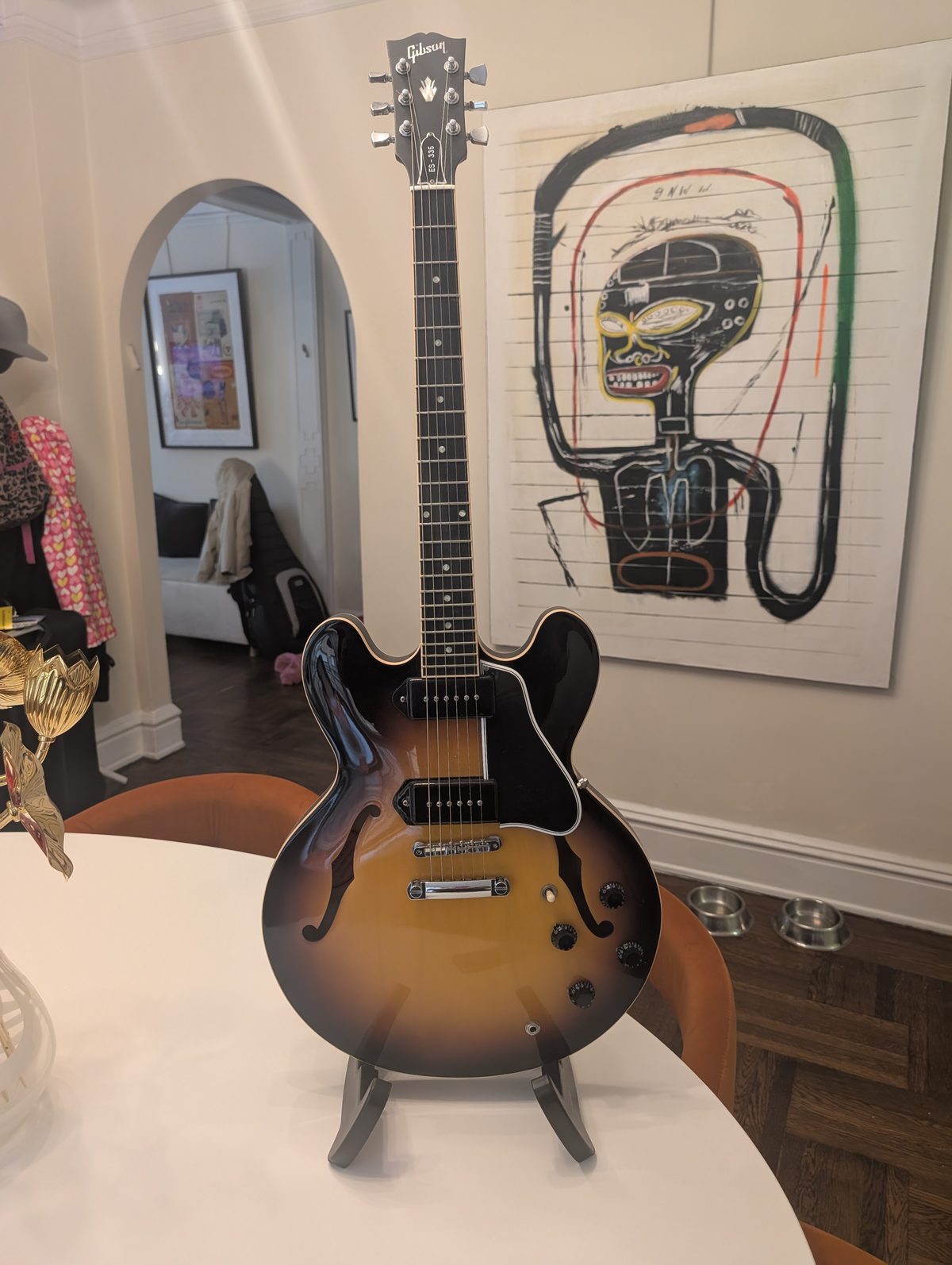
Gibson ES-335 with P-90s: The Rare One, Reviewed After Years of Ownership
A long-term review of the Custom Shop ES-335 with factory dogear P-90s: what the rare pickup swap does to the most famous semi-hollow ever made.
-
The $40 Guitar Setup: The Best Upgrade You Can Buy Is Not a Guitar
What a professional setup actually includes, why it transforms cheap guitars, when you need one, and which parts you can safely learn to do yourself.