
Fender Richie Kotzen Telecaster Review: The Neck I Love, the Bridge Pickup I Don't Reach For

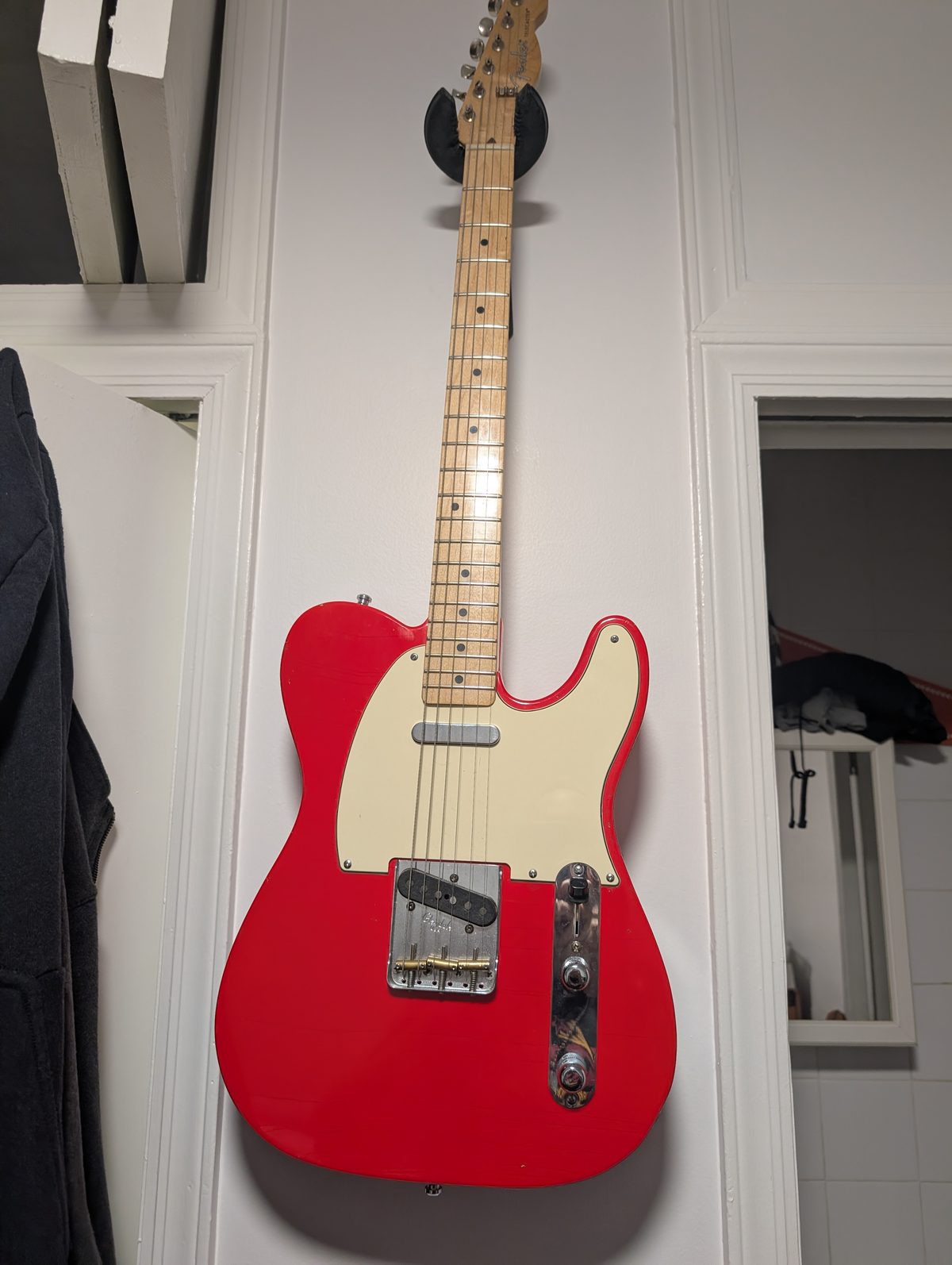
I bought this one in November 2025, a MIJ Richie Kotzen signature Telecaster in Brown Sunburst. It's a guitar I keep for one specific reason and reach past for most others, and I'd rather say that plainly up front than write around it.
The neck is the reason to own one
Start with the thing I actually love: the neck is huge, a genuinely oversized profile compared to anything else in my rack, and I love it anyway. It's a big handful in a way that should be a compromise and just isn't, it plays easily, no fighting it, no adjustment period where you're negotiating with the shape. If you've got bigger hands or you just like more wood to hold onto, this neck alone is worth playing before you write the model off.
The rest of the spec sheet is real too: ash body with a flame maple top, that same big-C maple neck, a maple board with a 12-inch radius and jumbo frets, 25.5-inch scale. It looks and feels like a serious instrument, not a novelty signature model riding a name.
The switching, and a bridge pickup I don't reach for
Here's where I split from the fans of this guitar. It ships with a three-way blade selector plus a series/parallel rotary switch on the two DiMarzio pickups, a Twang King in the neck and The Chopper T in the bridge. Some players love having that series/parallel option, the idea being the series setting pushes the pickups toward a thicker, more humbucker-like output without actually swapping pickups. I get why people like it. For me, it doesn't add a lot. I own the switch, I don't really use it.
And if anything, the bridge pickup is too humbuckery on its own, series switch or not. It's voiced thicker and rounder than I want out of a Telecaster bridge position, which is usually the spot I want the most single-coil bite, not the least.
Why I reach for the Paisley Teles instead
I own two Brad Paisley signature Telecasters, and between the two guitars, the Paisleys get picked up more. Their pickups have a more vintage voicing, more tele, less humbucker, and that's the character I actually want from this body shape. If I want gain, I'd rather get it from the amp than from a hot, humbucker-leaning bridge pickup baked into the guitar. That's one of the bigger points I make about my own rig in general: the guitar's job is tone and touch, the amp's job is gain. A Telecaster that leans toward humbucker output at the bridge is solving a problem I'd rather solve somewhere else in the signal chain.
Should you buy one
If the neck profile is what you're after, or you're specifically hunting for a Telecaster that can get closer to humbucker territory without an actual humbucker, this is a genuinely well-built way to get there, real Japan-built quality, a real spec sheet, not a gimmick. If you want a Telecaster that stays a Telecaster at the bridge and you're getting your gain from the amp anyway, my two Paisley signatures do that better for me, and this one sits in the rack more than it comes out. Owned and played, not a clean win, and I think it's more useful to say so than to round it up.
Keep reading
-

Fender Brad Paisley Telecaster Review: Paulownia, a Spruce Cap, and a Second Purchase
Owned and gigged, bought a second one on purpose. What the paulownia body and spruce cap actually do, what the pickups get right, and the one thing that still bugs me.
-

Why Japanese Telecasters Keep Winning
Two FujiGen-built Telecasters bought three weeks apart, a heavy-but-loved Kotzen signature, and the actual argument for why Japan-market guitars are built to a different standard.
-
Reverend Eastsider T vs Fender Telecaster: I Own Both, Here's the Honest Split
The modern T-style question, answered from a rack that holds both: where the Reverend objectively wins, where the Fender recipe still rules, and who should buy which.
FAQ
What's different about the Richie Kotzen Telecaster's pickups and switching?
It uses two DiMarzio pickups, a Twang King in the neck and The Chopper T in the bridge, with a standard three-way blade selector plus an added series/parallel rotary switch. The series setting pushes the pickups toward a thicker, more humbucker-like output. It's a real feature some players like a lot; I mostly leave it alone and still find the bridge pickup voiced thicker than I want from a Telecaster.
Is the oversized neck actually comfortable to play, or just a novelty?
It's genuinely comfortable, in my experience. It's a bigger handful than a standard profile, but it plays easily rather than feeling like something you have to work around. That neck is the specific reason I keep this guitar.