
Buffer vs True Bypass: What Actually Matters for Your Tone
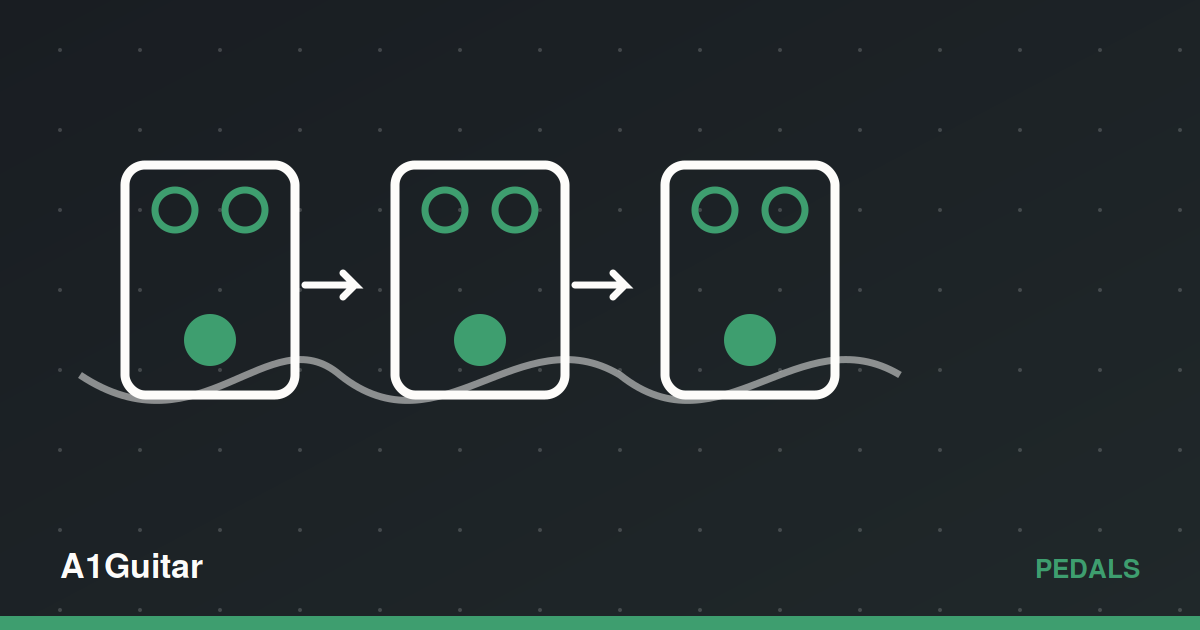
Few pedal debates generate more confident wrong answers than buffer versus true bypass, mostly because “true bypass good, buffers bad” got repeated so often it started sounding like physics instead of the oversimplification it is. Here’s the actual signal-chain reasoning, which cuts the other way more often than the internet consensus admits.
What’s actually happening electrically
Your guitar’s pickups are a high-impedance source, and high-impedance signals degrade over distance and through connections: capacitance in long cable runs quietly rolls off your top end, the effect getting worse the more cable and the more pedals (even bypassed ones, if they’re poorly designed) sit between guitar and amp. A buffer is a simple circuit that converts your signal to low impedance early, which makes it far more resistant to that degradation over subsequent cable and pedal runs. A true bypass pedal, when switched off, physically routes your signal straight through a mechanical switch with zero circuitry touching it, meaning zero coloration from that pedal, but also zero help with the impedance problem, and worse, a chain of several true-bypass pedals wires their bypass switches and internal wiring in series, adding cumulative capacitance of its own even while “doing nothing” to the signal.
Where true bypass wins
For a short, simple board (three or four pedals, a reasonably short cable run to the amp), true bypass is the right call and the reputation is earned: your bypassed pedals contribute nothing, your tone stays exactly what your guitar and amp would sound like connected directly. Also right for anyone chasing a specific vintage-simplicity tone, or players who genuinely and specifically dislike how a particular buffer sounds (matters of taste, and legitimate ones), since a bad or overly colored buffer absolutely is audible and can flatten a chain’s dynamics if you don’t like its particular flavor.
Where a buffer wins, and this is the underreported half
A long board (eight-plus pedals) built entirely from true bypass units, run through 20 feet of cable to the amp, is the exact setup where the “true bypass preserves tone” reputation quietly fails: all that series wiring and cable capacitance rolls off high end and softens the attack, even with every pedal switched off, and the player usually blames the pedals for “sucking tone” when the actual culprit is the accumulated passive signal path with nothing buffering it. One well-placed buffer, early in the chain or at the start of a long cable run to the amp, restores the top end and punch a long chain otherwise loses, which is precisely why so many boutique boards deliberately include one buffered pedal (a tuner is the classic choice) even when everything else is proudly true bypass, and why gigging boards with real distance to the amp benefit from a buffer almost regardless of pedal count.
Fuzz is the one real exception
The one place this advice inverts: vintage-style fuzz circuits (Fuzz Face types especially) interact directly with your guitar’s pickup impedance in a way a buffer in front of them disrupts, often making the fuzz sound thin, gated, or wrong. If a fuzz is in your chain, put it first, before any buffer, true bypass or not, and treat that placement rule as non-negotiable regardless of what else is on the rest of the board.
The actual decision
Short simple board, short cable run: true bypass is fine and arguably ideal, don’t overthink it. Long board, long cable run, or any true-bypass chain that sounds duller than the guitar sounds plugged straight into the amp: add one buffer, early in the chain (fuzz excepted), and stop treating “true bypass everywhere” as a virtue independent of the actual chain it’s built into. The pedal-power question gets the same treatment on this site for the same reason: the marketing claim and the electrical reality frequently disagree, and the electrical reality is the one that actually reaches the amp.
Keep reading
-
Your First Pedalboard for Under $200 (Buy in This Order)
A complete, expandable first board: which pedals to buy, in what order, where used money goes furthest, and the traps that waste half your budget.
-
Pedal Order Explained: The Signal Chain That Makes Everything Sound Better
The standard pedal order, why it works, and when to break it. Tuner, drive, modulation, delay, reverb, plus where loopers, wahs, and fuzz actually go.
-
Pedal Power, Explained: Why Your Board Hums, Clicks, and Dies (and the $0-to-$150 Fixes)
Daisy chains vs isolated supplies, milliamps, polarity, and voltage: everything about powering pedals, in plain English, ranked by what actually causes problems.