
Gibson USA vs Epiphone Inspired by Gibson: Is the Real Thing Worth the Gap?
You’re paying for US manufacturing, USA-made pickups, better finish options, and historically tighter quality control, plus the name on the headstock. Some of that gap is smaller than it used to be. Some of it isn’t closing at all.
This is probably the single most-asked question in the Gibson-shaped corner of the guitar world, and it deserves a straight answer instead of forum mythology in either direction. Epiphone’s Inspired by Gibson line uses shapes and specs licensed and authorized directly from Gibson, not knockoffs, not “in the style of.” Gibson USA is the real thing, made in Nashville. Here’s what actually separates them.
What you’re paying more for
Where it’s built. Gibson USA guitars are made in the US. Epiphone’s Inspired by Gibson models are built overseas, mostly in China and Indonesia depending on the model, under Gibson’s design oversight and QC standards. That’s a real cost difference in labor and materials, and it’s the biggest single reason for the price gap.
Pickups. Gibson USA models typically ship with USA-made pickups, Burstbucker variants and other in-house Gibson designs built to specific historical or modern voicings. Epiphone uses its own pickups, ProBucker and Alnico Classic lines among others, designed to approximate similar tonal territory at a much lower manufacturing cost. They’re not bad pickups. They’re just not the same parts, made in a different place, to a different cost target.
Finish. Gibson USA offers nitrocellulose lacquer finishes on many models, a thinner, more traditional finish that some players feel lets the wood resonate more freely and ages in a way poly doesn’t. Epiphone uses polyurethane, more durable, more consistent, cheaper to apply at scale. Nitro is genuinely nicer to a lot of players and genuinely more fragile, chips easier, shows wear faster. That’s a real tradeoff, not just a status symbol.
Quality control, historically. Gibson USA has traditionally had tighter fit-and-finish consistency, fret work, and setup quality out of the factory than Epiphone. This is the part guitar forums exaggerate the most. Epiphone’s build quality has improved substantially over the past several years, tighter tolerances, better fret work, more consistent setups. The gap that used to be wide is now genuinely narrow on a lot of models, and plenty of players do a full setup on any guitar regardless of price anyway, which erases most of what’s left of it.
Resale value. Gibson USA guitars generally hold value better on the used market. Partly that’s brand equity, partly it’s actual scarcity, partly it’s the assumption that USA-made means longer-lasting. If resale matters to you, it’s a real factor. If you’re buying to keep and play for years, it matters less.
The name. It says Gibson on the headstock instead of Epiphone. For some players that matters, for résumé reasons, for how it looks on stage, for the simple satisfaction of owning the real one. For a lot of other players it genuinely doesn’t matter at all, and pretending otherwise is dishonest in both directions.
Being fair to Epiphone
A lot of good, working players gig Inspired by Gibson models happily and never think twice about it. The authorized shapes mean you’re getting real Gibson body dimensions and neck profiles, not an approximation. The pickups are voiced with real thought, not just cheap facsimiles. And the price difference isn’t small, it’s often two to three times the cost for the Gibson USA equivalent, which buys a lot of amp, a lot of pedals, or a second guitar entirely.
The honest framing: Gibson USA is a better guitar in most measurable ways, US build, US pickups, nitro option, tighter historical QC, better resale. Epiphone Inspired by Gibson is a genuinely good guitar that’s closed more of that gap than the mythology admits, at a fraction of the cost. Whether the remaining gap is worth the money is a personal call, not an objective one.
For the deeper dives on each side, the Gibson USA Original Collection and Gibson USA Modern Collection pages cover the American-made tiers, and Epiphone Inspired by Gibson and Epiphone Inspired by Gibson Custom cover the overseas lineup in detail. The Gibson lineup guide ties the whole picture together if you’re still sorting out where to start.
Keep reading
-

Acoustic or Electric First? Pick the One You'll Actually Practice
The honest answer to the most common beginner guitar question, including the finger-pain myth, the real costs of each path, and the one factor that predicts who keeps playing.
-

Buying a Guitar Online Without Playing It First: How to Not Get Burned
Reverb, marketplace, and retailer tactics from someone who's bought and sold online for years: what photos to demand, what questions filter sellers, and when to walk.
-
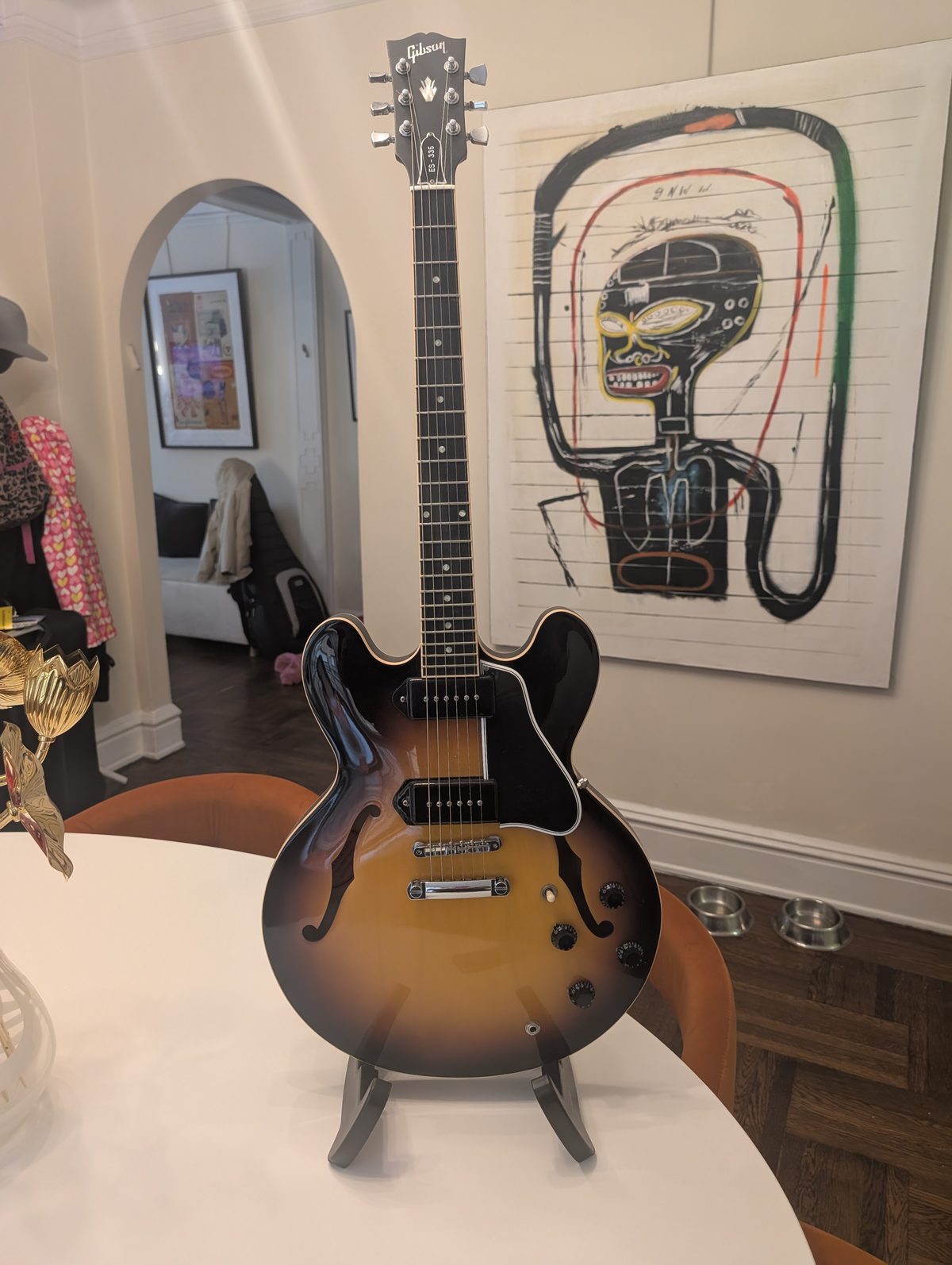
Gibson ES-335 with P-90s: The Rare One, Reviewed After Years of Ownership
A long-term review of the Custom Shop ES-335 with factory dogear P-90s: what the rare pickup swap does to the most famous semi-hollow ever made.